
Collaboration is the North’s greatest strength: NorthCAN 2025 Year in Review Table of Contents In the North, For the North: NorthCAN in 2025 North Stars: Case Studies Showcasing Northern BC…
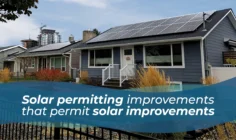
The solar & battery permitting guide for local governments With the growing popularity of solar panels and battery systems, local governments are working to ensure British Columbians enjoy safe, reliable…

CEA’s Katherine McDougall drove across Canada in her EV and discovered the special charm of community charging stations.

Communities have shared their priorities and are ready for the Province of BC to re-commit to climate action through CleanBC.

The Township of Langley’s expanded support for local builders through education, training, engagement, and consultation contributed advancing building policies without facing pushback or resistance from the community and building industry. In December 2023, the Township of Langley became the first community south of the Fraser River to adopt Zero Carbon Step Code.
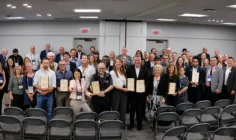
Celebrating Bold Action and Creative Leadership September 24, 2025 Communities that are at the forefront of incorporating sustainability and climate action into their operations and planning were recognized with Climate…

CEA and BCMCLC Host Climate Dialogue Involving Community Leaders and Government Ministers September 22, 2025 Finding the synergy between climate action, economic strength, and community well-being – and connecting all…

Northeastern BC is leading the province on community-scale solar energy. In June 2025, Community Energy Association organized a two-day tour in the region visiting different solar energy projects. Visitors were able to see with their own eyes the local contexts, barriers that were overcome, and the benefits solar is bringing to northern BC communities.

Hudson’s Hope attracted nearly $1.3 million in grant funding to install solar panels on all of its large municipal facilities in 2018 and now saves approximately $63,000 per year on electricity costs.

The need to replace a failing arena floor in the local rec centre prompted the District of Mackenzie to source external funding that allowed the new arena floor to incorporate a heat recovery system powered by solar panels that is dramatically reducing energy and water consumption, reducing operating costs, and contributing to the longevity of this critical piece of civic infrastructure.
