Government Ministers and Local Elected Officials Seek More Opportunities for Cooperation on Climate and Community Resilience
September 14, 2026
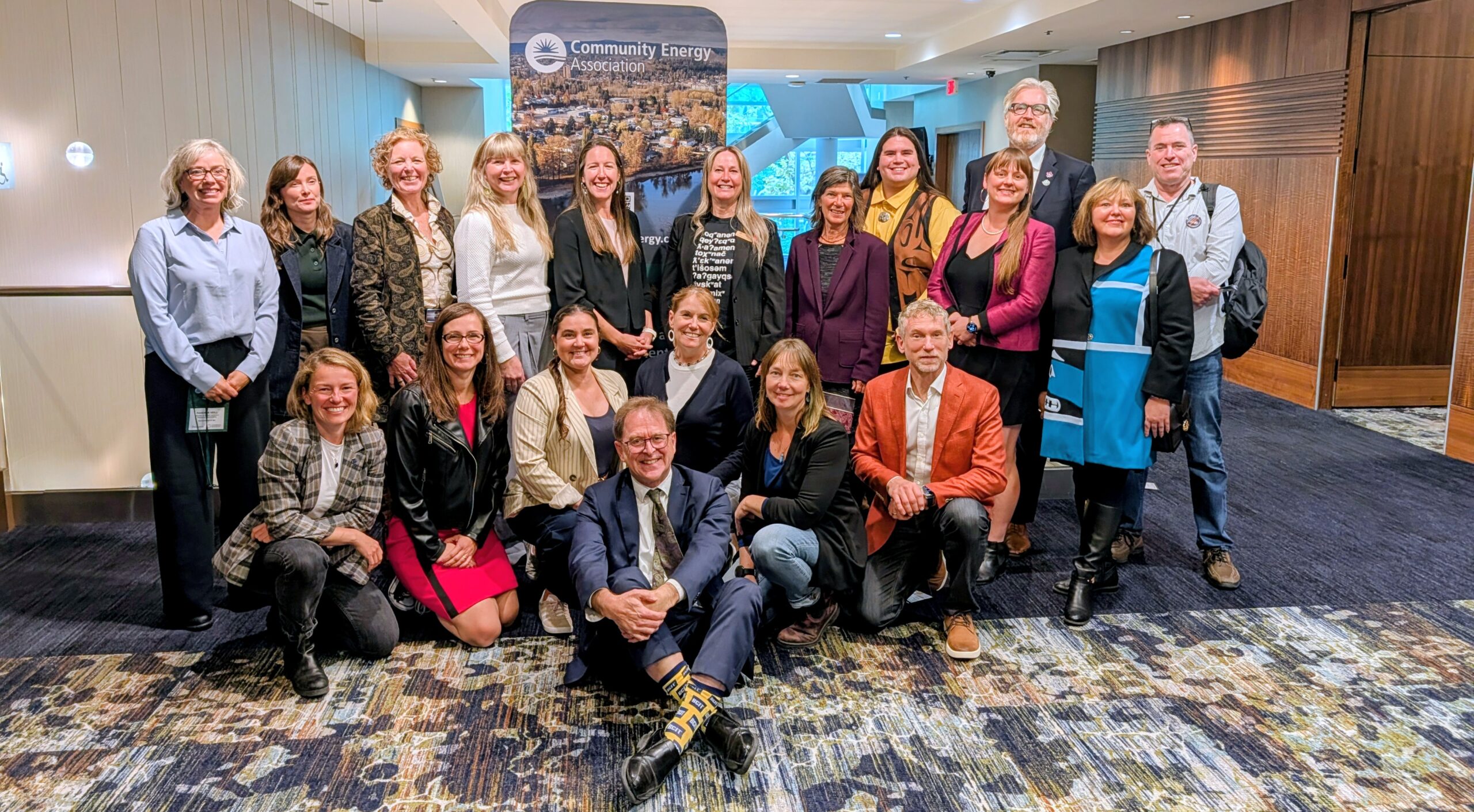
Photo: Local elected officials, funders, and BC Government ministers after a dialogue on community climate impacts that focused on inter-governmental support and collaboration.
What level of government is most critical for action on climate and community resilience? Is it the provincial government, which has funding and jurisdiction over critical services? Local governments, which have on-the-ground experience and responsibility for local infrastructure? Or First Nations, which are disproportionately affected by climate change and have rights related to their self-determination?
There’s no simple answer, but they all have to work together.
This need for collaboration was highlighted over and over again in a unique meeting at the annual Union of BC Municipalities convention in Vancouver today, where BC cabinet ministers and local elected officials who are members of the BC Municipal Climate Leadership Council steering committee shared priorities for action and public education.
These priorities include watershed preservation, wildfire preparedness, waste management, providing cooling during heat domes, tourism, and investing in solar PV on civic facilities.
The diversity of topics and importance of coordination was summarized by City of North Vancouver councillor Jessica McIlroy: “We want to deeply highlight that local governments are, and must be, the province’s partner in building a more resilient, more electrified, more affordable, and more decarbonized province.”
Call for reinvestment
Partnering on the implementation of this vision requires capacity, and today’s meeting featured multiple requests from elected representatives for the renewal of the Local Government Climate Action Program (LGCAP). Created by the Province in 2021, LGCAP has since disbursed more than $120 million to local governments and Modern Treaty Nations for local initiatives that add expertise, enhance infrastructure, reduce operating costs, and implement renewable energy projects. This is the last year of committed funding even though local governments have more than doubled the provincial contribution by securing match funding.
“Meetings like this confirm that local governments and Indigenous communities are the Province’s most powerful implementation partners,” says CEA’s CEO, Megan Lohmann, who provided welcoming remarks for the event today. “LGCAP is essential for this partnership to exist, providing communities with foundational funding to reduce emissions while also addressing local impacts of climate change.”
About the BCMCLC
Today’s meeting was the 14th annual gathering at UBCM of provincial ministers and local officials facilitated by BCMCLC. The group was formed in 2009, initially by mayors interested in coordinating advocacy on climate change. Today, BCMCLC’s membership includes hundreds of mayors, councillors, area directors, and representatives of Indigenous governments. BCMCLC is facilitated by the Community Energy Association with guidance from a steering committee composed of local government and First Nations elected officials from across BC.
Thanks to the event’s sponsors: BC Hydro, Vancity, and the Real Estate Foundation of BC.