
Collaboration is the North’s greatest strength: NorthCAN 2025 Year in Review
About NorthCAN
The Northern BC Climate Action Network (NorthCAN) showcases examples of Northern BC leadership and convenes a regional community of practitioners who identify, influence, and implement climate-related solutions that bring multiple benefits to communities across Northern BC.
Established in 2022 by the Community Energy Association, NorthCAN brings together officials from local governments (staff and elected), Indigenous communities, health care and education, business and industry, and NGOs. They meet regularly via zoom and in-person, forming the only region-wide, multi-sector organization sharing information and building relationships for the low-carbon transition. There are now more than 400 NorthCANers, from more than 50 communities.
In the North, For the North: NorthCAN in 2025
Meetings in 2025 included the in-person NorthCAN Forum and a special meeting to collect northern perspectives on the CleanBC review. There was also a tour of community solar projects in northeastern BC and two additional meetings via zoom. NorthCAN was also featured in the ICLEI Livable Cities Forum, a national conference that celebrates local leadership and innovation on climate action.
Meeting Topics
Local Government Climate Action Program
Northern Health Climate and Sustainability Roadmap
Northern Regional Energy Dialogues project led by researchers at UNBC and the University of Victoria
Regenerative agriculture in Northern BC
.
ICLEI Canada’s Climate Insight program to support resilient and low-carbon housing and infrastructure
BC Energy Step Code implementation
Early-stage ideas and opportunities in housing, transportation, energy systems, food, water, and resilient infrastructure
Fostering health and wellness in a changing climate
.
Glacier change in Northern BC and why it matters here and across Canada
Climate monitoring and research in the Nechako Watershed
Salmon and sturgeon recovery in the Nechako Watershed
Northern perspectives on the provincial review of CleanBC
Tours

Low-carbon fuel production: Arbios Biotech and Tidewater Renewables

Northern BC’s first net-zero neighbourhood, in Prince George

Northern BC’s largest EV-charging station, at the College of New Caledonia

Wood Innovation Research Laboratory

Lakeland Mills and the Distribution Centre for the Downtown Prince George Renewable Energy System

Solar projects in central and northeastern BC: housing in the Saulteau First Nations, municipal facilities in Hudson’s Hope, the North Peace Museum in Fort St. John, the Peace Energy Co-operative office in Dawson Creek, and the Mackenzie Rec Centre.
Member Participation
Sectoral representation

.
Geographic respresentation

Feedback from participants
The combined data from 2025 presents a clear message: Northern BC communities cannot tackle climate impacts alone. They need structured collaboration, dedicated connectors, and a supported regional network that amplifies local leadership.
.
NorthCAN end of year survey:
- All respondents indicated that NorthCAN is relevant to their work, with more than 80% indicating that it’s very or extremely relevant.
- 86% of respondents indicate that they have met new contacts through NorthCAN and more than one-quarter have developed or implemented a local project as a result of these new connections.
- “Learning about initiatives in other northern communities” is #1 for what NorthCANers value
Every NorthCAN meeting features a poll, providing an opportunity to collect perspectives and feedback from participants on key climate, resiliency, and capacity topics in Northern BC. Some results from 2025:
- From the NorthCAN Forum, participants strongly agreed (4.6 on a scale of 1-5) that they met new colleagues from across the region at the event, with the highest score (4.7) in response to whether they have identified new opportunities for collaborative action.
- From the Solar Tour, all participants indicated intention to explore solar energy further, with 80% indicating they are extremely likely to explore solar options for their community after the tour and 70% wanting to be part of a regional cohort for advancing opportunities for solar energy in the north.
- From the meeting focused on the Nechako Watershed, drought was identified as the #1 regional concern but water governance and water quality were also identified, especially related to the link between water and community health.
North Stars: Case Studies Showcasing Northern BC Leadership
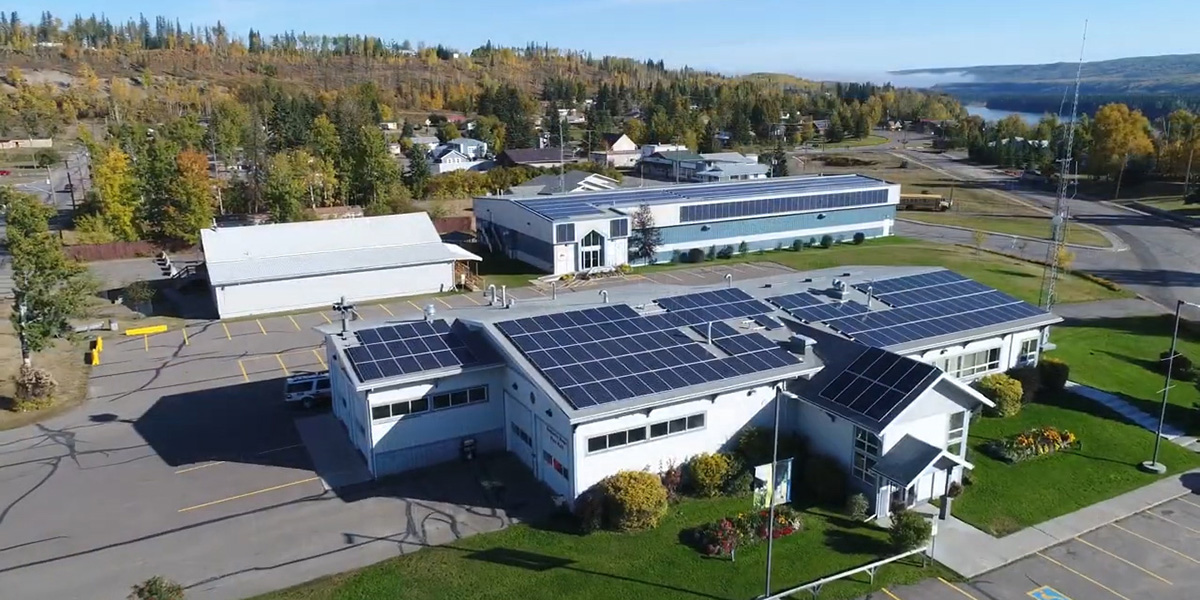
District of Hudson’s Hope benefitting from solar panels on municipal facilities

How the District of Mackenzie’s failing arena floor led to a whole new solar-powered energy system
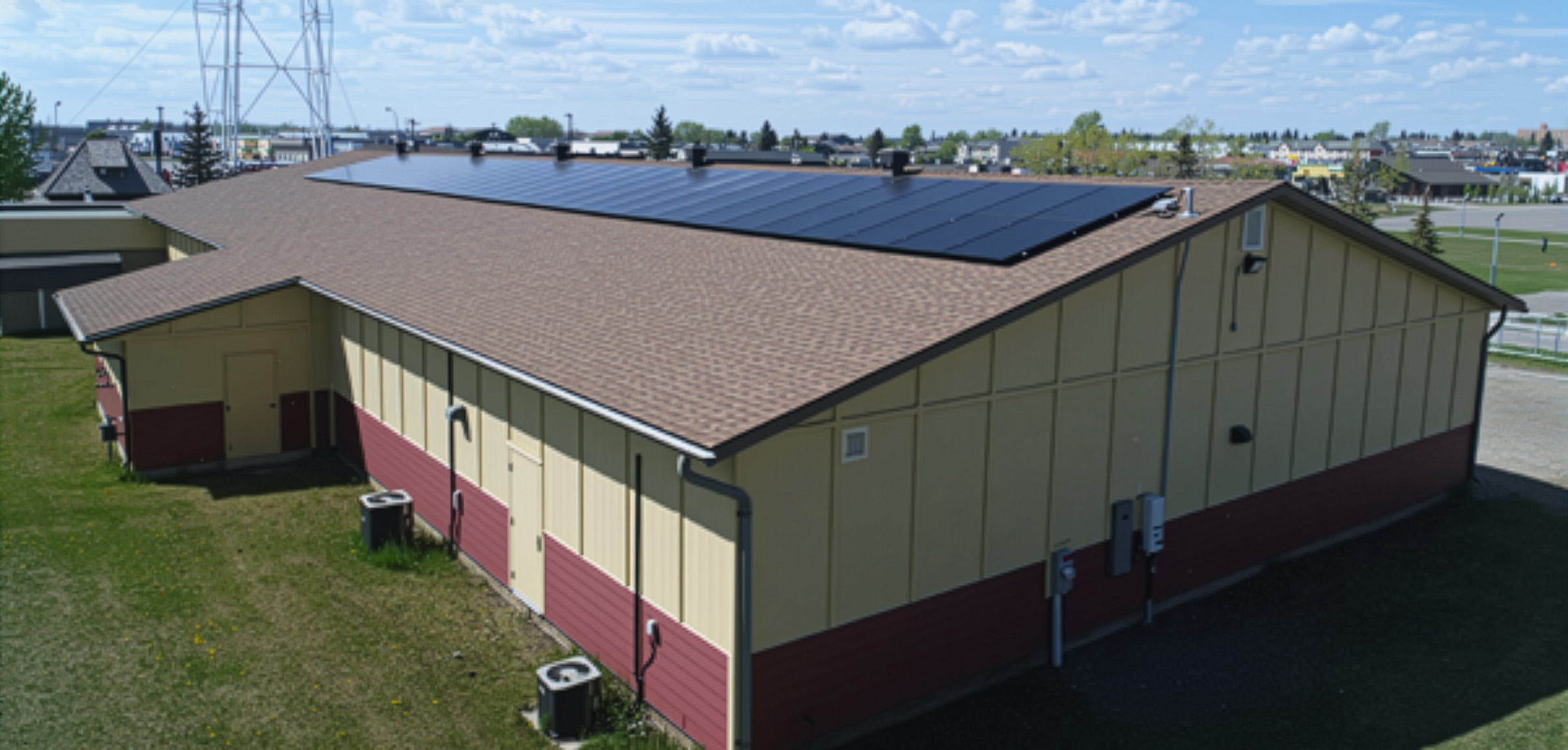
Fort St. John North Peace Museum is saving on energy to invest in programming
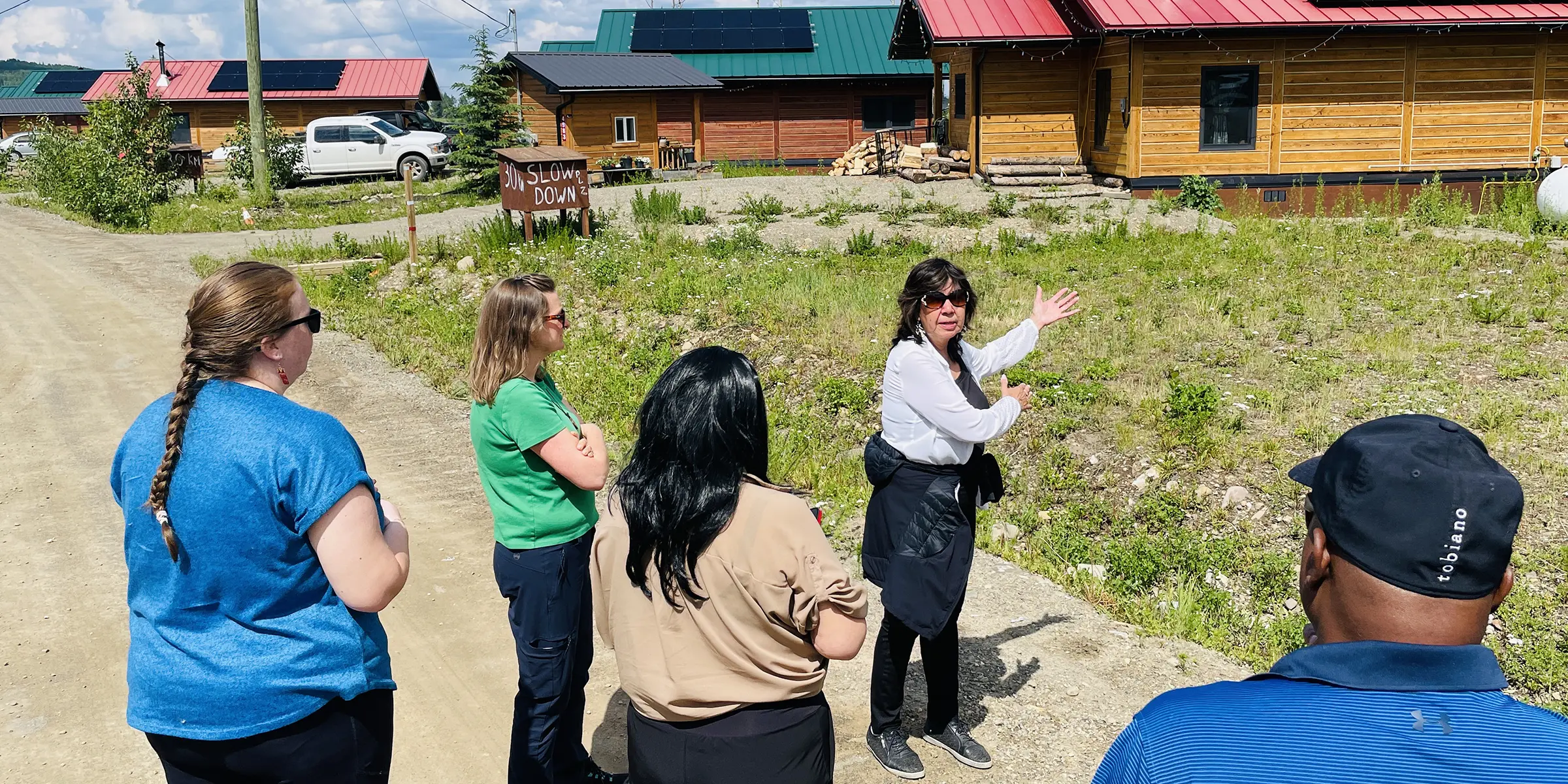
Saulteau First Nations’ community-wide residential solar program

Northwest Energy Retrofit Forum: Learnings from a Regional Approach

Cutting the uncertainty in retrofit costs in Northwestern BC
Around the Region: Some Notable Developments in 2025
Million-kilometre milestone for Charge North
Charge North, a collaboration of northern local governments, tourism organizations, and First Nations communities, reported in early 2025 that the close to 60 electric vehicle charging ports in the program had provided enough power to enable more than 1 million kilometres of emission-free travel – equivalent to driving across Canada 120 times.
Ground-breaking for the Anahim Lake Solar Project
A groundbreaking ceremony was held in June for a solar project that will be 100% owned by the Ulkatcho Energy Corporation and reduce the need to burn diesel for electricity in Anahim Lake by 64%.
“Solar North” on Haida Gwaii
The Masset airport is the site of Northern BC’s largest solar project, which was developed by Tll Yahda Energy, a partnership involving the Skidegate Band Council, Old Massett Village Council, and the Council of the Haida Nation.
Fleet Forward
A first-ever showcase of zero-emission medium and heavy-duty vehicles attracted funders, solutions-providers, vehicle manufacturers, and community representatives from around the North to Prince George, some of whom travelled more than 700km to attend.
Climate Planning from Northern Health
Northern Health released its first climate change and sustainability roadmap: A five-year plan with 18 key actions that will guide the health authority towards a sustainable future through responsible and effective climate leadership.
Nisga’a Leadership Rewarded
The Nisga’a Lisims Government received a Climate & Energy Action award during the Union of BC Municipalities convention, highlighting their commitment to a multifaceted climate leadership plan that includes a greenhouse gas inventory, a low-carbon transportation plan, a focus on healthy home energy retrofits, and a high-performance building standard for new construction.
Completion of a unique bioenergy facility
Construction of Arbios Biotech’s Chuntoh Ghuna facility in Prince George wrapped up, with the Prince George facility ramping up in its ability to transform forest residues and other woody biomass into a renewable bio-oil that can be refined into transportation fuels with a low carbon footprint.
Port Slashes Greenhouse Gas Emissions
Along with efforts to boost electrification at the Prince Rupert Port, the Port Authority collaborated with 13 partners and their fuel supplier to replace conventional diesel with a renewable diesel alternative for trucks, rail equipment, and marine vessels, cutting GHG emissions by two-thirds.
Housing Projects
Recent multi-unit housing projects in northern BC have showcased energy efficiency and rooftop solar to enhance long-term affordability and energy security. These include a 16-unit seniors housing project in Valemount and two, 6-unit housing units in the Witset First Nation.
Unique conferences in Northern BC on low-carbon futures
Future Fuels Forum – hosted by the City of Prince George in January, it brought together industry, government, and innovators to discuss hydrogen, biofuels, and other sustainable energy opportunities.
Low-Carbon Transportation Forum – Presented by the BC Assembly of First Nations in May, this first-ever event focused on safe, affordable, and reliable low-carbon and active transportation.
Future of Forestry Think Tank – hosted by the City of Quesnel, the May event featured a bioeconomy component for the first time, showcasing opportunities for economic development and new products aligned with decarbonization and sustainability goals.
