
What’s Happening with Hydrogen in BC
Primer
Hydrogen is a high energy fuel with many potential uses, from transportation to power generation, to energy storage. When used in a fuel cell, hydrogen produces electricity and the only emission is water vapour.
When hydrogen is manufactured using renewable energy, it is a zero-carbon fuel. Today, most hydrogen fuel is processed from natural gas (methane) and requires carbon sequestration to be considered a zero-carbon fuel.
The B.C. Hydrogen Strategy (2021) positions hydrogen as a targeted solution for sectors, such as heavy-duty and long-haul transportation, where it is challenging to adopt battery electric vehicles. The strategy sets out how the Province of BC will work with private industry and other jurisdictions to develop hydrogen infrastructure in support of achieving net-zero emissions by 2050.
Published: March 31, 2026
Updated: n/a
Relevant Topics: Electric Mobility, Renewable Energy
Types of hydrogen vehicles
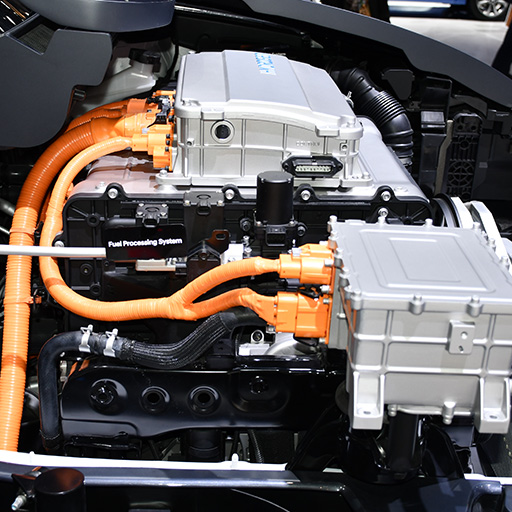
Fuel Cell Electric Vehicles
Fuel cell electric vehicles (also called FCVs or FCEVs) use hydrogen stored onboard and oxygen from the air to generate electricity in a fuel cell. This electricity powers an electric motor or is stored in a high-voltage battery. The only tailpipe emissions are water vapour and heat. As a result, FCEVs are classified as zero‑emission vehicles and meet the B.C. Zero‑Emission Vehicles standard.
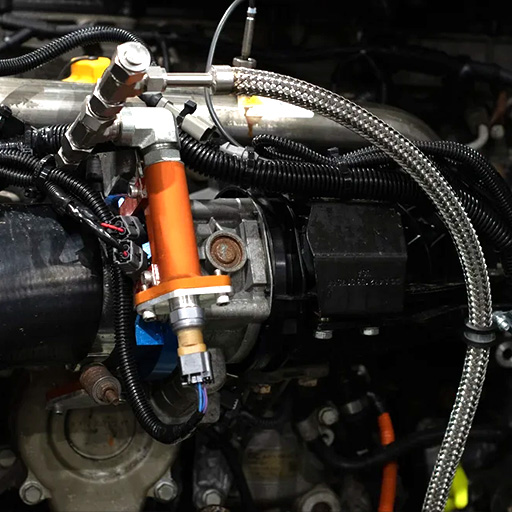
Hydrogen-Diesel Hybrid vehicles
In a hydrogen-diesel hybrid engine, a small amount of hydrogen oxygen gas is injected with the diesel, accelerating combustion so that the diesel burns more fully. This improves fuel efficiency by 20% to 30% and reduces greenhouse gas emissions, with tailpipe carbon dioxide emissions lowered by up to 28%.
Diesel engines can be converted or repowered as hydrogen-diesel hybrids. This process is feasible for large diesel engines (6L to 16L) including class 6 trucks, class 8 trucks, buses, large generators, and heavy-duty equipment.
Hydrogen Refueling
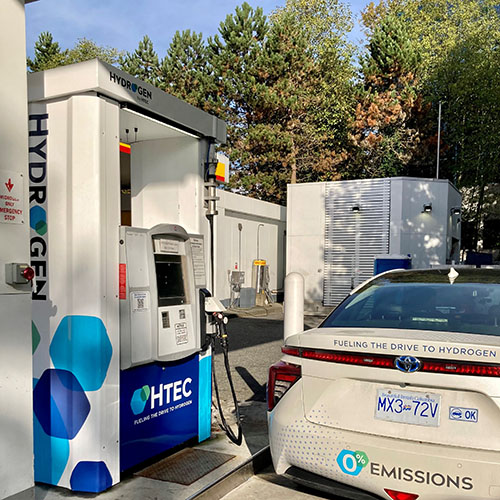
How it Works
Refueling with hydrogen is much like filling up with diesel: drive to a station and use the nozzle to dispense hydrogen into your vehicle’s tank.
What’s different? Because hydrogen is a high-pressure gas, the gas is cooled to sub-zero temperatures and the nozzle locks onto your vehicle while filling. Hydrogen is sold by the kg rather than the litre.
Refueling takes around five minutes for a passenger vehicle and 15 to 20 minutes for a medium- or heavy-duty truck (about the same as a diesel truck). This makes FCEVs excellent for use cases where long battery-charging times are impractical.
Public Options in BC
BC’s public refueling network consists of stations operated by HTEC in Victoria, Metro Vancouver, and Kelowna. As of 2024, HTEC planned to expand up to 20 hydrogen refuelling stations across BC and Alberta.
Hydra Energy is building a refueling station for heavy-duty vehicles in Prince George and another is planned in Prince Rupert.
Production facilities are planned to be developed in Burnaby, Nanaimo, and Prince George, by companies including HTEC, FortisBC, and Hydra Energy.
Procurement Options in BC
Leasing
HTEC VLC specializes in leasing FCEVs to BC-based heavy duty vehicle fleet operators. HTEC currently offers a number of class 8 truck-tractor models. They are actively assessing medium-duty FCET platforms, yard trucks, buses, and drayage trucks for urban deliveries and return-to-base operations.
HTEC aims to support every aspect of adoption, including FCEV selection, vehicle and station driver training, data collection, hydrogen fueling solutions, and maintenance at a purpose-built service facility.

Retrofit
Hydra Energy offers a hydrogen-diesel conversion that allows existing heavy-duty diesel trucks to operate on up to 40% hydrogen.
Hydra Energy is also aiming to create a Western Canada Hydrogen Corridor by installing hydrogen refueling stations along Highway 16, connecting Prince Rupert port to Edmonton, AB via Prince George.
Hydrogen Pilot Projects in BC
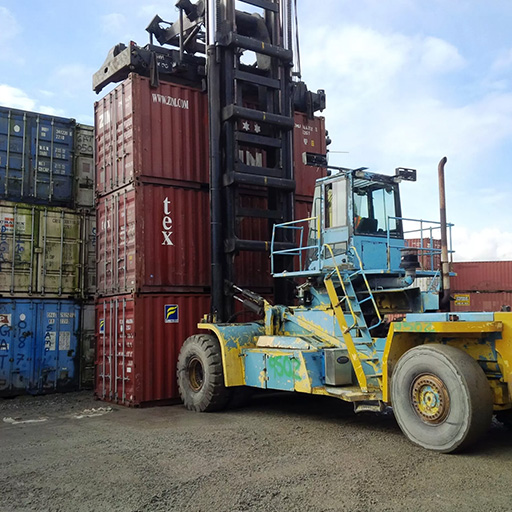
Northern BC hydrogen-diesel hybrid conversion pilot
Announced Dec. 2025
A pilot project with Prince Rupert, Kitimat, and Smithers will install hydrogen fuel enhancement modules from Empire Hydrogen on heavy-duty vehicles and equipment. Testing these hydrogen-diesel hybrid conversions will provide fleet operators with valuable real-world data and a better understanding of the benefits.
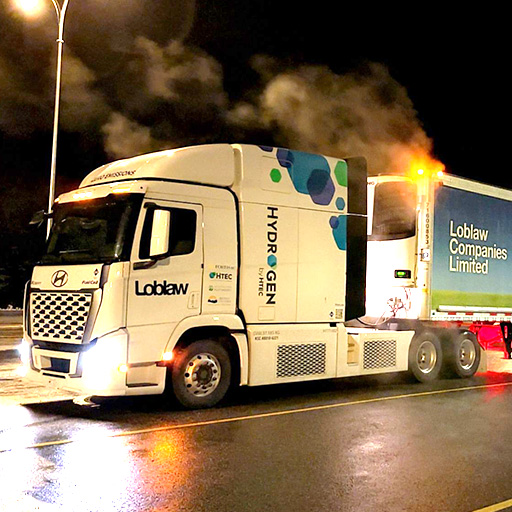
Loblaws FCEV
Photo credit: Gurlal Brar
Announced Nov. 2025
Loblaw and a number of partners trialed a hydrogen-powered class 8 truck, the first sustained commercial demonstration of such a truck in BC. Loblow used HTEC’s Hyundai Xcient FCEV truck in daily regional distribution service areas across several routes. Typical daily distances covered over 250 km, with hydrogen consumption around in the range of that advertised by Hyundai (9 kg/100 km). The data showed consistent performance across varying payloads and elevation profiles, demonstrating that the trucks can integrate into BC commercial operations without compromise and can run multiple routes per day with low dwell time.
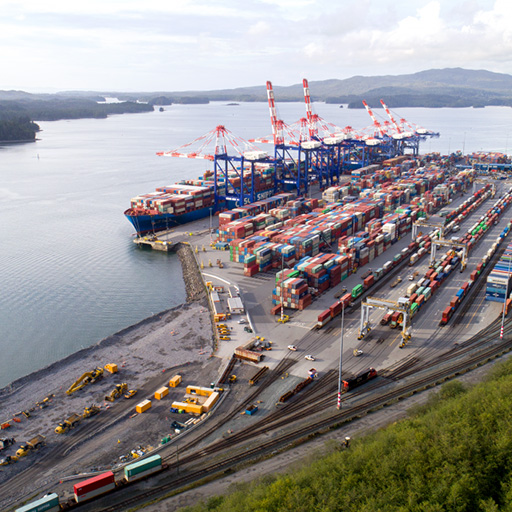
Prince Rupert Port Authority FCEV trial
Announced June 2024
The Prince Rupert Port Authority has acquired a number of low- and zero-emission heavy-duty vehicles, including a Hyundai XCIENT FCEV truck. These vehicles were purchased through the Heavy Duty Zero Emissions Vehicle Pilot Project, a partnership with Innovate BC's Integrated Marketplace. The FCEV is operated by Gat Leedm Logistics drivers and tested on a route between Prince Rupert and Terrace with fuel supplied by Hydra Energy. This trial, running to the end of 2026, will provide data to better understand the range, reliability and potential best use cases for hydrogen vehicles.
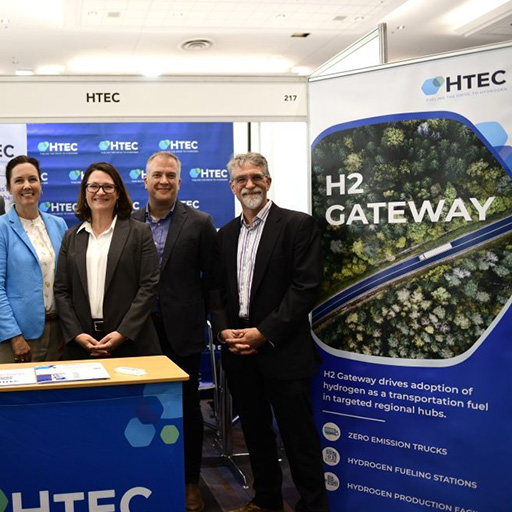
H2 Gateway
Announced May 2024
Under the H2 Gateway banner, HTEC plans to build and operate an interprovincial network of up to 20 hydrogen refueling stations to support the deployment of fuel cell electric vehicles, in particular heavy-duty hydrogen trucks. HTEC currently operates six refueling stations Victoria, Metro Vancouver, and Kelowna.
The refueling stations will be supplied by three hydrogen production facilities located in Burnaby, Nanaimo, and Prince George, and a facility that liquefies 15 tonnes per day of vented byproduct hydrogen in North Vancouver.
BC Hydrogen Ports Project
Announced June 2023
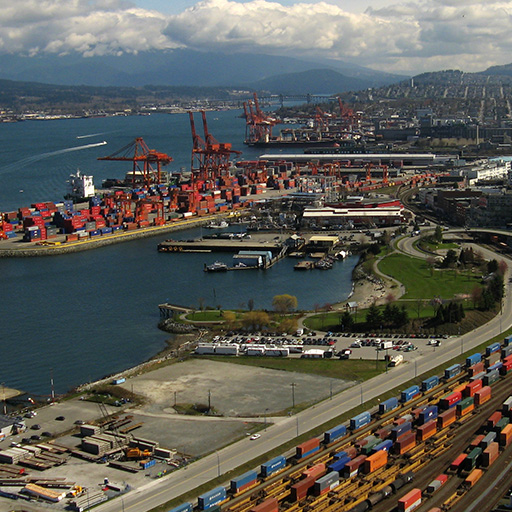
The BC Hydrogen Ports Project, a collaboration between public and private sectors, is piloting BC’s first large-scale use of hydrogen and fuel cells in the shipping and transportation sectors. A private consortium led by HTEC will operate a high-capacity refuelling station near the Port of Vancouver serving heavy-duty hydrogen electric vehicles. In addition, the project is making available for lease FCEV yard trucks and drayage trucks for industry to trial. This pilot project is estimated to reduce CO2 emissions by 110 tonnes per year.
Key players in BC’s hydrogen landscape
Ballard Power Systems: World-leading fuel cell manufacturer and researcher with roots back to 1979. Based in Burnaby with manufacturing facilities in BC, the US, Denmark, and China.
FortisBC: Natural gas, electricity and energy provider with 1.3 million customers. Also produces and distributes hydrogen fuel and blended fuels and supports hydrogen research.
Greenlight Innovation: Manufactures tools and testing equipment to ensure electrolyzers and fuel cells safety and reliability. Based in Vancouver and manufacturing since 1992.
Hexagon Purus: Manufacturer of hydrogen fuel storage and battery storage systems for a range of vehicles. Operates a facility in Kelowna since 2023.
HTEC: An integrated hydrogen company that manufactures, operates refueling stations, and leases medium- and heavy-duty FCEV trucks. Opened Canada’s first retail hydrogen refueling station in 2018.
Hydra Energy: Provides heavy-duty trucks with hydrogen-diesel co-combustion conversion kits, enabling them to run on hydrogen and fallback to diesel. Also developing refueling stations between Prince Rupert and Edmonton, AB.
Ionomr: Research and manufacturer based in Vancouver, focused on developing new materials to support clean technologies including fuel cells, hydrogen production, and energy storage.
Nortrans: One of Western Canada’s largest freight transportation fleet operators, with terminals in Kelowna and Chilliwack.
Powertech Labs: One of the largest testing and research labs in North America, with specialization in energy infrastructure and automative manufacturing.
