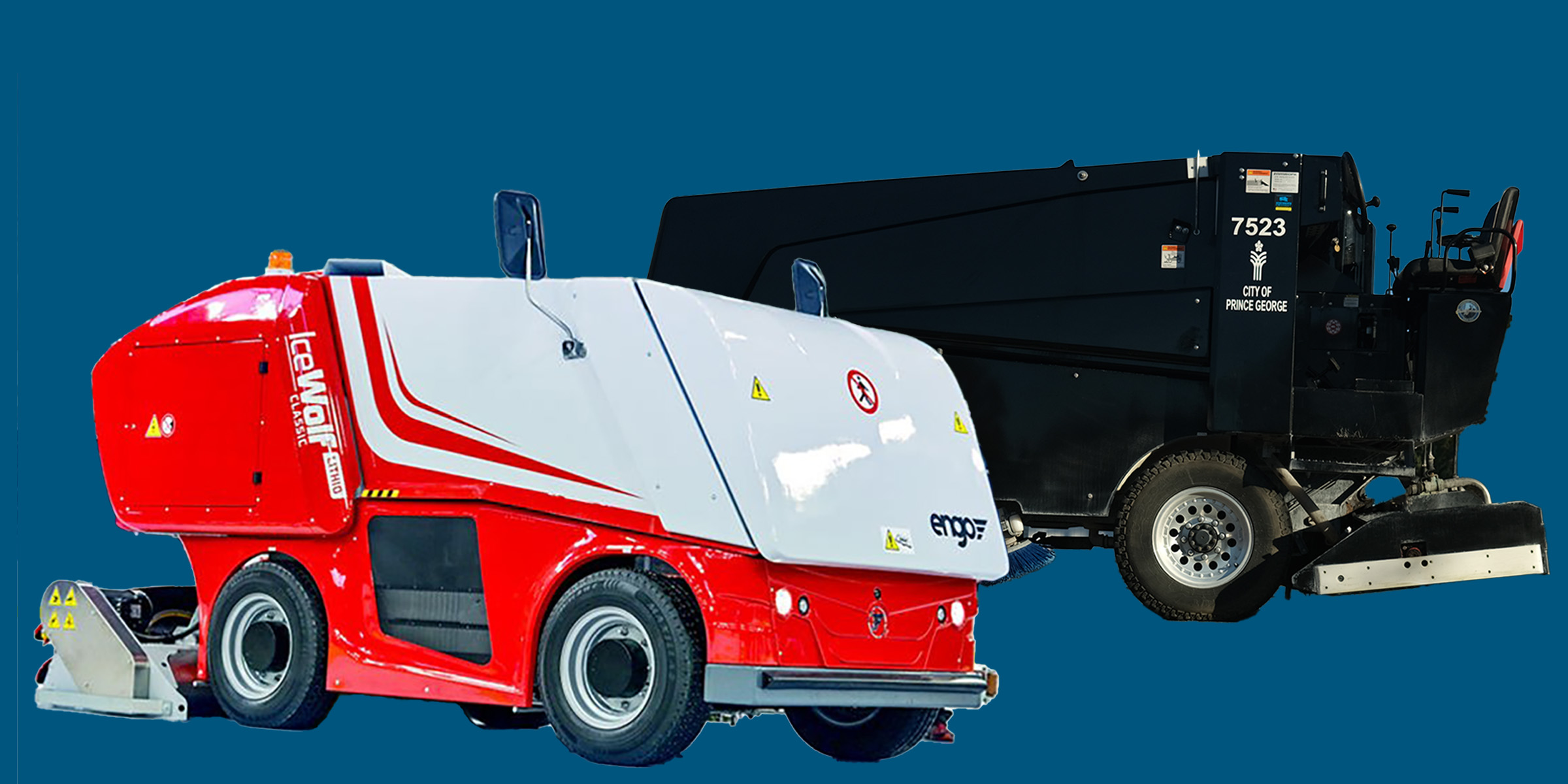
Electric ice resurfacers are a “win-win” for communities aiming to score air quality goals
Case Study
Historically, ice resurfacers have been powered by propane, but electric models now account for the majority of new purchases in BC.
Both drivers and fleet managers appreciate that they are cheaper to operate and produce no exhaust fumes, while continuing to serve community services. And Health Canada has recommended them as the number one way to address the public health issue of poor air quality in arenas.
We find out how the City of Richmond and the City of Prince George first adopted electric ice resurfacers and are now moving their whole fleet to electric.
Why are they doing it?
- Human health - Electric ice resurfacers do not burn a fossil fuel, so they don’t produce exhaust fumes when operating. This improves the indoor air quality, and lowers risk to staff and arena users’ health.
- Achieve emissions targets - Transitioning a vehicle to electric helps a local government meet emissions reduction targets set in community plans.
- Cost savings - Lower fuel and maintenance costs offset the higher upfront purchase cost, reducing the total cost of ownership.
Note
Health Canada considers the levels of carbon monoxide and nitrogen oxide inside arenas a public health issue. In the Federal government’s 2021 guidelines on improving air quality in arenas, the number one recommendation is transitioning to an electric ice resurfacer.
Published: March 31, 2026
Updated: n/a
Relevant Topics: Electric Mobility
Climate Zone: 5
BC Trends
The official supplier for Zamboni-brand ice resurfacers in BC and Yukon says that around 80% of new Zambonis sold in BC are now electric.
Dave Humphries of Surrey-based Kendrick Equipment says that customers are most often looking for improved indoor air quality and the opportunity to reduce overall greenhouse gas emissions in their fleet.
He adds: “The operators like it because it is quiet and there are no fumes, but it has a lot of power and torque. It still has the same feel.”
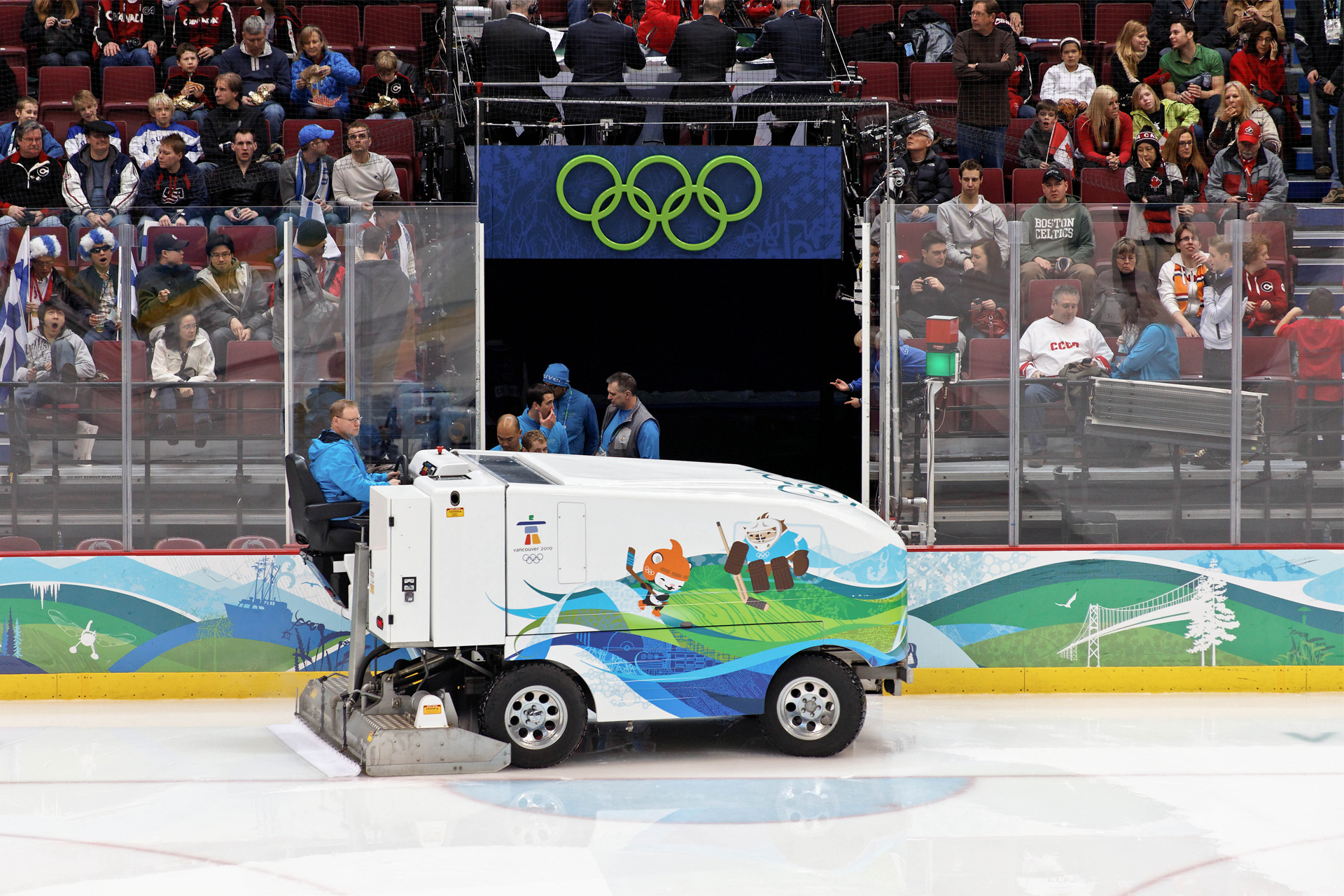
Burke Tucker of Vimar Equipment in Burnaby supplies Ice Bear resurfacers, which are manufactured by Olympia. He says that most BC rinks have already purchased or at least are strongly considering battery-powered resurfacers.
He adds: “They give off zero emissions, and there is less maintenance and less energy cost. The approximate cost of electricity is $0.40 per ice clean versus about $3 per clean using propane. Over a full year will offset the additional cost of electric machines, although payback depends on the number of cleans per year.”
What They
Did
City of Richmond added its first electric ice resurfacers 20 years ago and now has its third generation of zero emissions machines.
Fleet Summary
- 2006: Began with three electric Olympia IceBear resurfacers to improve indoor air quality at the Richmond Ice Centre.
- 2012: The fleet went fully electric with five new Olympia Ice Bear resurfacers
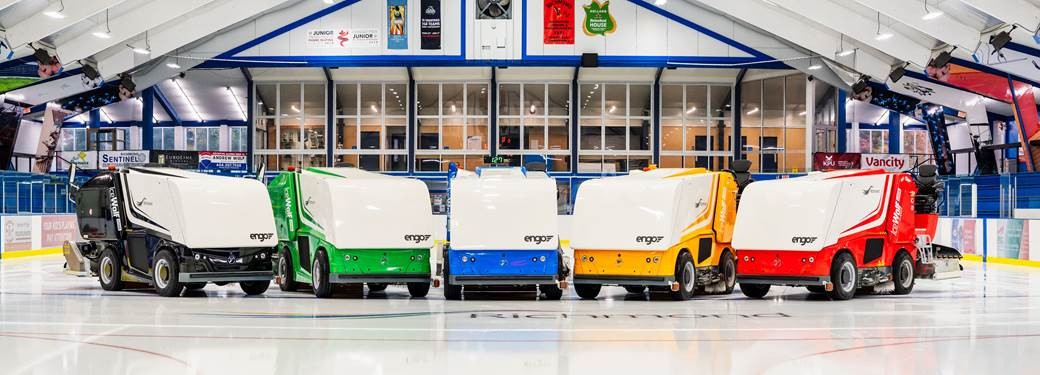
- 2025: Updated with five Engo Ice Wolf Classic resurfacers. Reason for updating was the 2012 equipment was aged, leading to a high repair cost and deteriorating batteries.
One resurfacer is stationed at Minoru Arena, that services two ice sheets nine months of the year, while three ice machines are dedicated to the Richmond Ice Centre for maintaining six ice sheets year-round.
A fifth unit is maintained as a backup for repairs or scheduled maintenance. The back up machine is regularly rotated into service to optimize use of all of the units.
Richmond staff have found that electric ice resurfacers require lower maintenance overall than propane models. To reduce downtime, staff recommend stocking parts and inventory and purchasing the same vehicle models. This allows mechanics to become familiar with vehicles and ensures they have timely access to the right parts and tools.
Outcome
Human health and safety
City of Richmond introduced the electric ice resurfacers as a way to eliminate fumes from the indoor arenas. While running propane resurfacers, staff had to perform twice-daily testing of air quality levels. Electric ice resurfacers presented a safer and more cost-effective solution – $4,000 has been saved annually by eliminating testing.
User groups and drivers also prefer the improved air quality in the arena.
Emissions reduction
Older models that burned fossil fuels to operate each emitted approximately 13.59 tonnes greenhouse gas emissions annually, or 68 tonnes across five vehicles. That’s equivalent to taking 15 passenger vehicles off the road each year.
Switching to electric resurfacers, as well as transitioning other fleet vehicles to zero emissions models, helped Richmond achieve its 2020 Green Fleet Action Plan milestone of a 20 per cent reduction from 2011 levels.
Cost savings
In 2006 the City estimated the increased cost of the machine would be offset by annual savings of $20,000 in fuel and maintenance, and $4,000 saved annually by eliminating daily air testing.
The lower total cost of ownership helped offset the purchase price which was around 30% higher than a propane-based vehicle.
What They
Did
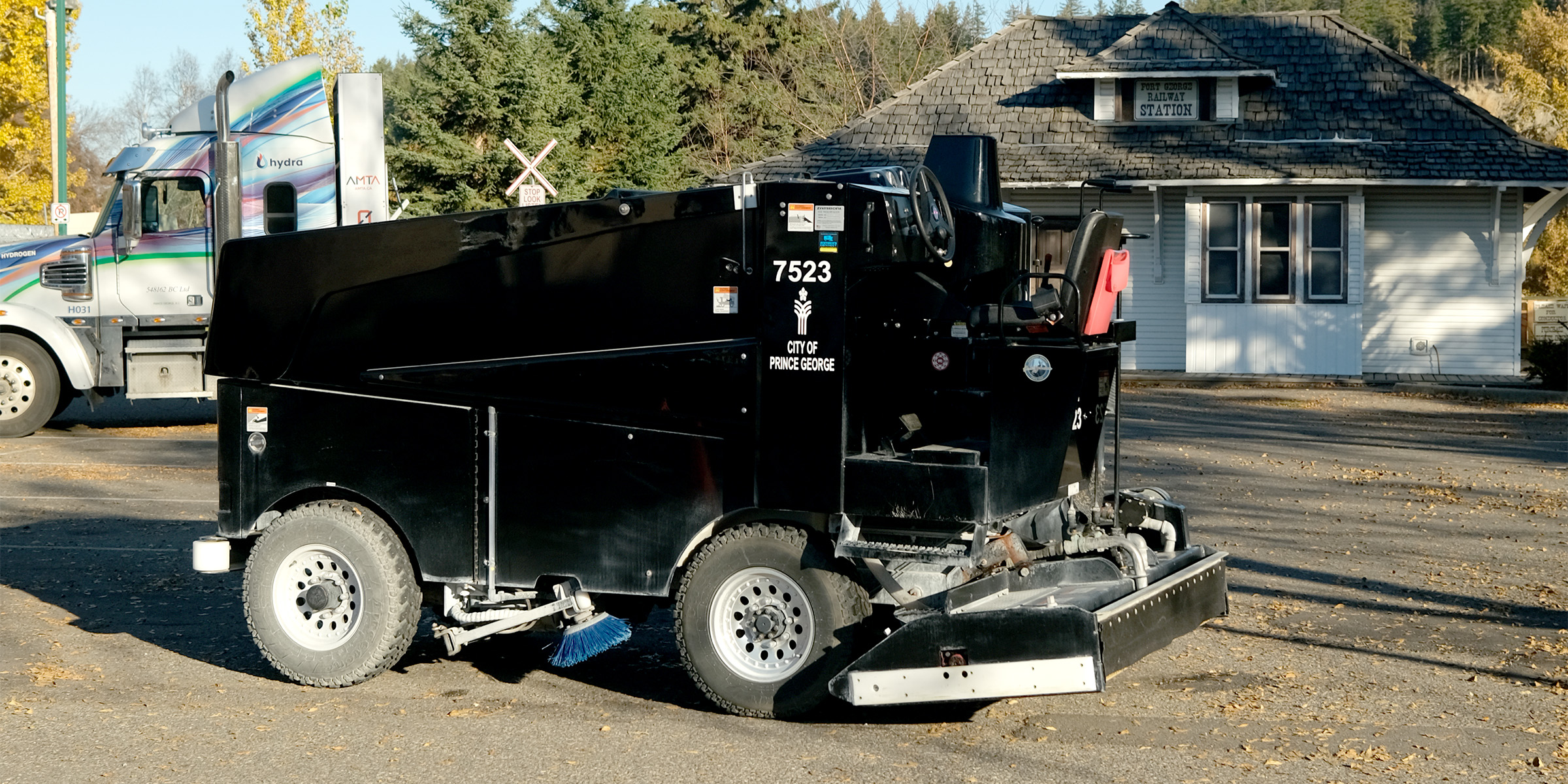
The City of Prince George’s first municipal medium duty electric vehicle was an e-Zamboni that was added to the northern BC community’s fleet in 2021.
It has been so successful that all 11 of the City’s ice resurfacers will be replaced with electric over the next five years. Three new models will arrive in 2026.
Fleet summary
Prince George has four municipal arenas served by a total of 11 Zambonis.
- 2021: Purchased a 552AC electric Zamboni to replace a propane ice resurfacer at Kin Arena
- 2026: Three electric Zambonis will be added.
- 2027-2030: Seven electric ice resurfacers will be phased in.
The charger at Kin Arena is located in the storage bay so it can easily be plugged in between ice floods and when the arena is closed. The arena already had enough electrical capacity to install the Level 2 charger, making it easy for a City crew to install.
Outcome
Operator satisfaction
According to Roads and Fleet Manager Jordan Wiseman, the new electric Zamboni is less physically taxing to operate than the propane models because operators no longer have to lift the 30lb propane tanks off and on the vehicle for refilling. This, plus the fact it is quiet and does not give off any fumes, make it more comfortable to operate.
In-person driver and technician training was provided by the equipment supplier and Wiseman says that after some initial apprehension to a new machine, staff have adapted well to it.
Reliability
Overall Wiseman says the electric Zamboni has been as reliable as propane and any maintenance issues have usually been due to non-electric components.
The biggest issue came a year into operating the electric Zamboni when it encountered a battery issue that was common to that model. Zamboni warrantied the batteries at no charge however no local battery disposal service was available to take away the old Lithium-Ion batteries, so they had to be stored safely and sent away two at a time with the monthly battery recycling collection service. For this reason, Wiseman recommends planning ahead for how to dispose safely of batteries if needed.
Lithium ion battery recycling in British Columbia is led by KC Recycling and Cirba Solutions. Operating from Trail, BC in the Western Kootenays, they recycle batteries to minimize waste and restore materials back into the value chain.
Reduced operating costs
The operating and maintenance costs of the electric Zamboni are much lower than the propane machines, offsetting the $220,000 purchase cost, which is about 25 % more than an ICE equivalent.
Improved air quality and emissions reduction
Zambonis is the first MHD ZEV in Prince George’, and Wiseman says it was an easy first step toward decarbonizing fleet vehicles, while also having an immediate improvement to air quality and health for operators and arena users.
“We take seriously the Province’s mandate for municipalities to reduce emissions in fleets, but it has been challenging finding electric medium- and heavy-duty equipment that works well in northern BC winter. Changing over the Zambonis feels like a win-win.”
Contributors

Andrew King
Project Manager (Transportation)
Community Energy Association

Rebecca Edwards
Communications Lead
Community Energy Association
Contributors
Andrew King
Project Manager (Transportation)
Community Energy Association
Rebecca Edwards
Communications Lead
Community Energy Association
Funding for this case study provided by:



Related Content
Fort St. John North Peace Museum is saving on energy to invest in programming
The North Peace Historical Society installed solar panels on the roof of the museum in Fort St. John as part of a strategic effort to reduce operating costs and channel the annual savings into additional local capacity in support of the organization’s mission.
