Renewable Energy for Regional Opportunity:
Can a solar panel withstand the force of an oyster shell dropped from high in the air by an eagle? That question was one of many examples of a strong coastal focus at “Renewable Energy on Vancouver Island: A Power-ful Opportunity,” held in Nanaimo at the beginning of the Indigenous Resource Opportunities Conference. Participants came from around region, representing a variety of sectors: First Nations communities, local governments, post-secondary education, health care, resource management consultants, energy companies and utilities, and funders.
The challenges and opportunities they identified were framed within the realization that Vancouver Island, according to BC Hydro, produces much less than half of the electricity it consumes, with the majority coming from undersea cables originating from the Mainland. Addressing this imbalance won’t be easy, especially as electricity demand in BC is forecasted to increase 20% by 2030 and double by 2050. Participants noted the lack of any proposal for new renewable energy projects on Vancouver Island in BC Hydro’s most recent call for power, but many identified that “having regional dialogues like this one” are critical to sharing information and building regional awareness and support.
Existing and Planned Projects
Vancouver Island has decades of experience with renewable energy projects, including many owned by First Nations communities. Discussion included a variety of utility-scale and community projects:
- The City of Cumberland’s potential geoexchange project at an old local coal mine.
- Cape Scott Wind Farm, which has 55 towers and has been operating for nearly 14 years.
- Quatsino First Nation’s solar and wind projects.
- The new Yəyus wind energy project near Campbell River being developed by Capstone and the Wei Wai Kum First Nation.
- The new net-zero Cowichan Hospital.
Participants noted the challenges with developing renewable energy projects on Vancouver Island. These include rugged terrain, road infrastructure and seismic risk, and accessing existing transmission lines. Participants suggested that while it might be easier to develop projects in BC’s Peace region, there is a need to balance the construction costs in different locations with reducing the need to transmit electricity over long distances to population centres.
Presented in partnership with:
The event was presented by Patricia Lightburn of the Canadian Renewable Energy Association, Relay Education’s Ryan Gander, and Rob van Adrichem of CEA.
"The future is electric and building more capacity now is our responsibility to the future.”
Advancing Renewable Energy Together
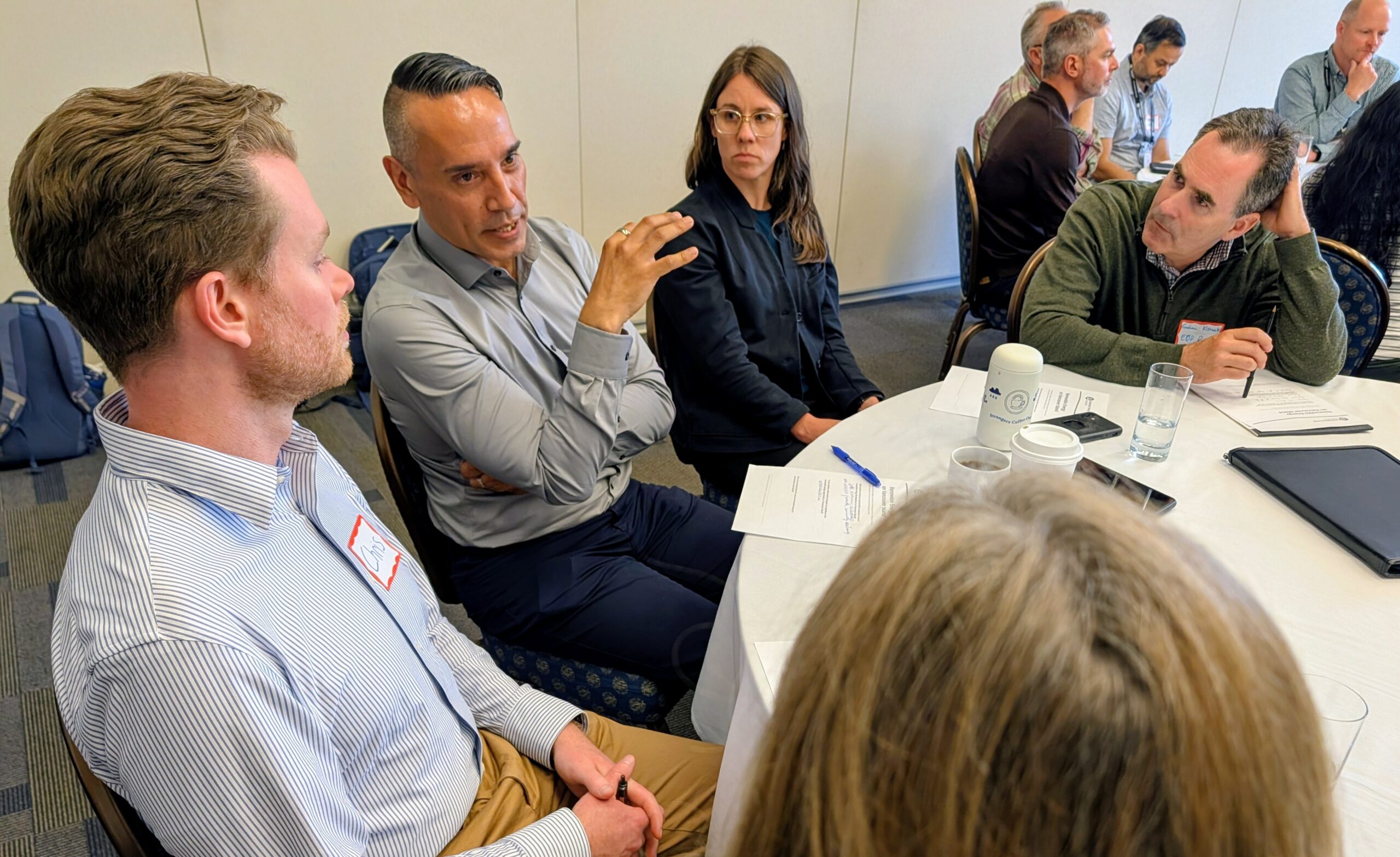
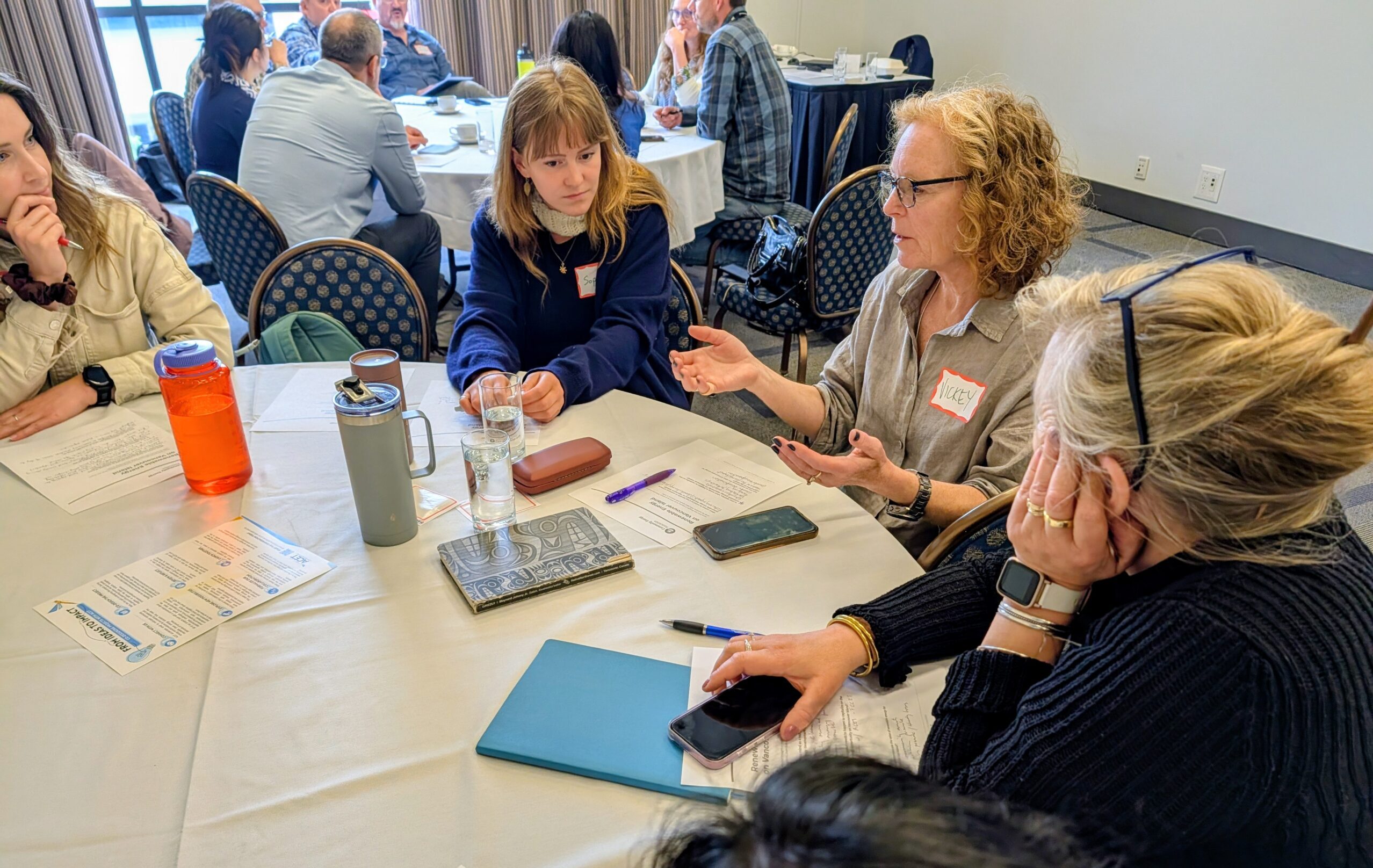
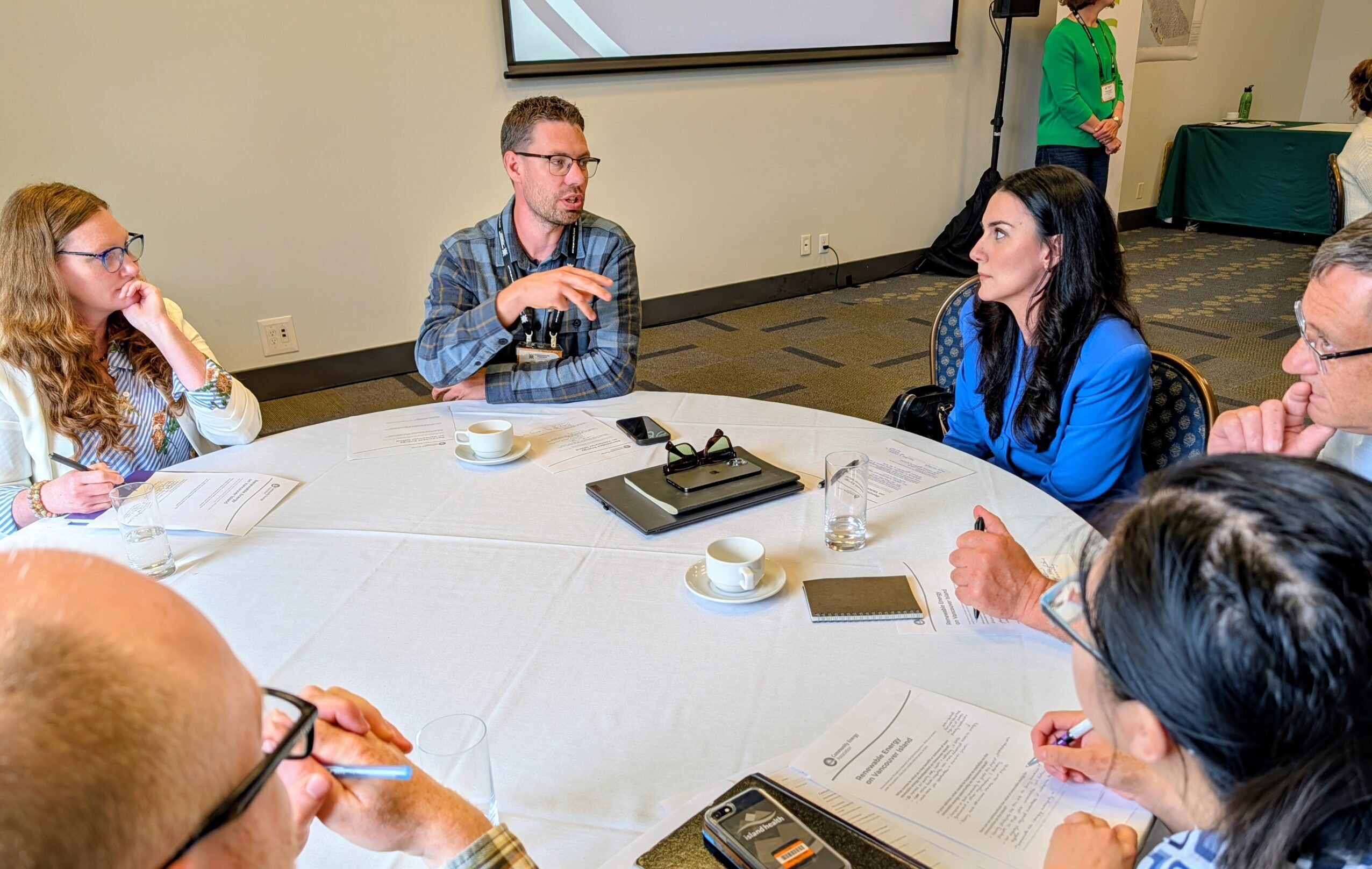
Dialogue was organized around three questions meant to focus on regional priorities and benefits.
“Community-owned, small scale renewable energy can support regional economic growth.”
“Local energy solutions help strengthen connections within communities and can jump-start additional community initiatives.”
“Jobs, economic development, and the growth of multiple kinds of industry.”
“Improved air quality can lead to improved health and well-being. Reducing health inequities can also lead to better access to energy and help address energy poverty which exists in a high percentage of households on northern and central Vancouver Island.”
“Renewable energy can displace fossil fuel use, especially in remote communities, and significantly reduce greenhouse gas emissions.”
“Grid diversification and related upgrades to the BC Hydro transmission and distribution grid. This will build capacity for additional projects in the future, address bottlenecks, and improve overall power reliability.”
“Simply providing more energy. The future is electric and building more capacity now is our responsibility to the future.”
“Strategic planning at a regional level. Is BC Hydro doing this already? Local involvement and a shared vision are necessary.”
“Develop partnerships, with First Nations, local governments, utilities, and educators/ researchers.”
“Financial incentives and investment opportunities. More exploration of sustainable financing models.”
“Faster permitting and policy to support regional development. Streamlining or overhauling approval processes to reduce project delays.”
“Improved transmission and distribution lines.”
“Education and skills/job training.”
“Countering misinformation.”
“Keep communities engaged and aware of potential renewable energy projects, the training that’s needed, and the jobs that would be available.”
“A champion in each community to guide the project, partner with government and other organizations, and secure funding….and training!”
“Having dialogues like this one to share information and raise awareness of current projects so other communities can follow or adopt.”
“More success stories that include day to day impacts and benefits to local residents.”
“Share all stories – not just success stories – through workshops, conferences, social media. Communicate risk and the fragility of energy imports. Involve youth.”
“Education, starting with children still in school.”
“Expand ‘power smart’ to be ‘smart with power’ that promotes clean energy and the context of Vancouver Island.”
“Emphasize energy sovereignty and energy security, particularly in the context of increasingly unstable global geopolitics.”
“Consider creating a public-facing website that tracks renewable energy projects across Vancouver Island and makes information about project outcomes, lessons learned, and community benefits more widely accessible.”
“Tours of renewable energy projects like the Solar Tour that CEA organized in northeastern BC last year.”
De-Mystifying Renewable Energy Technologies
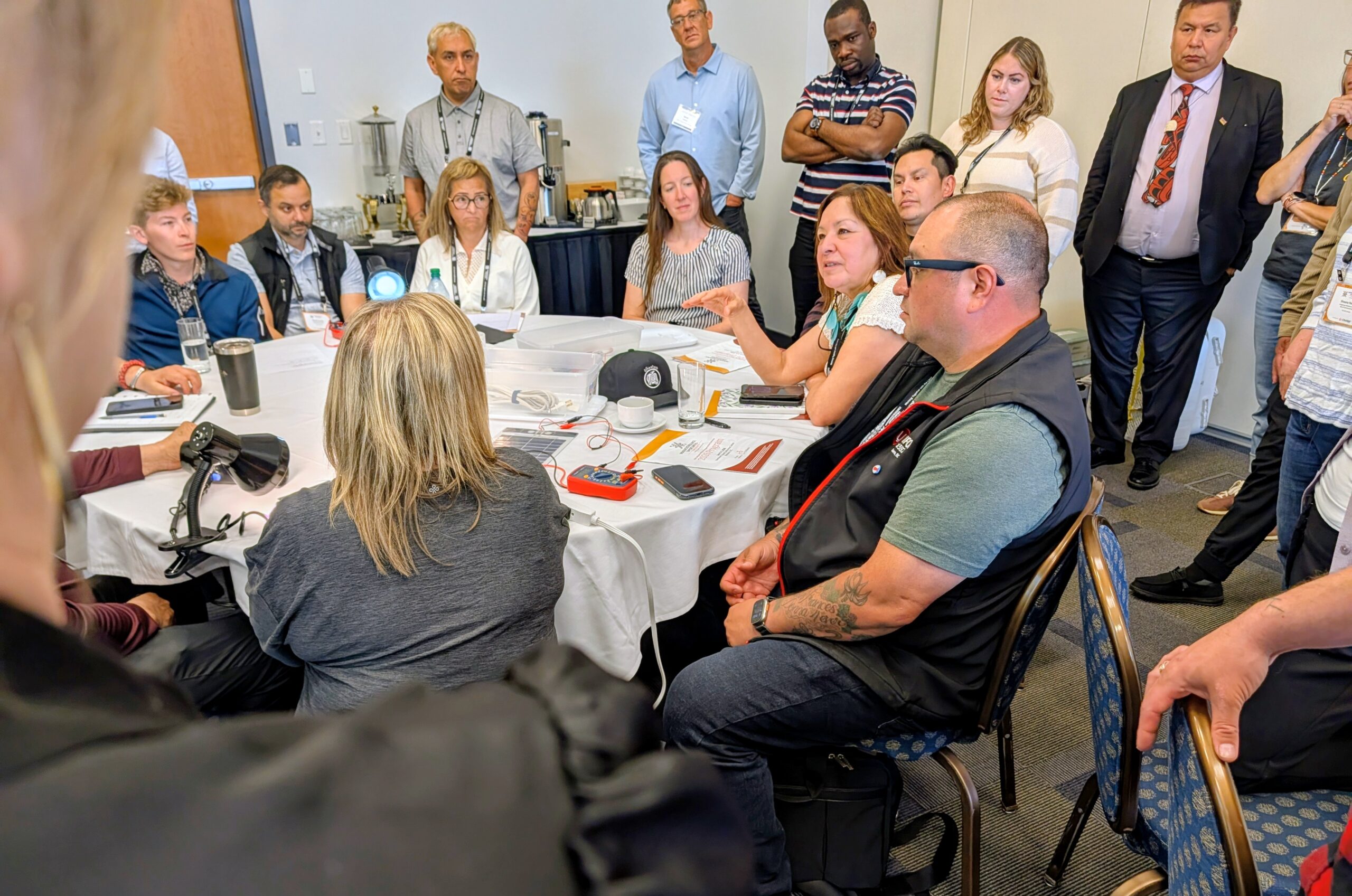
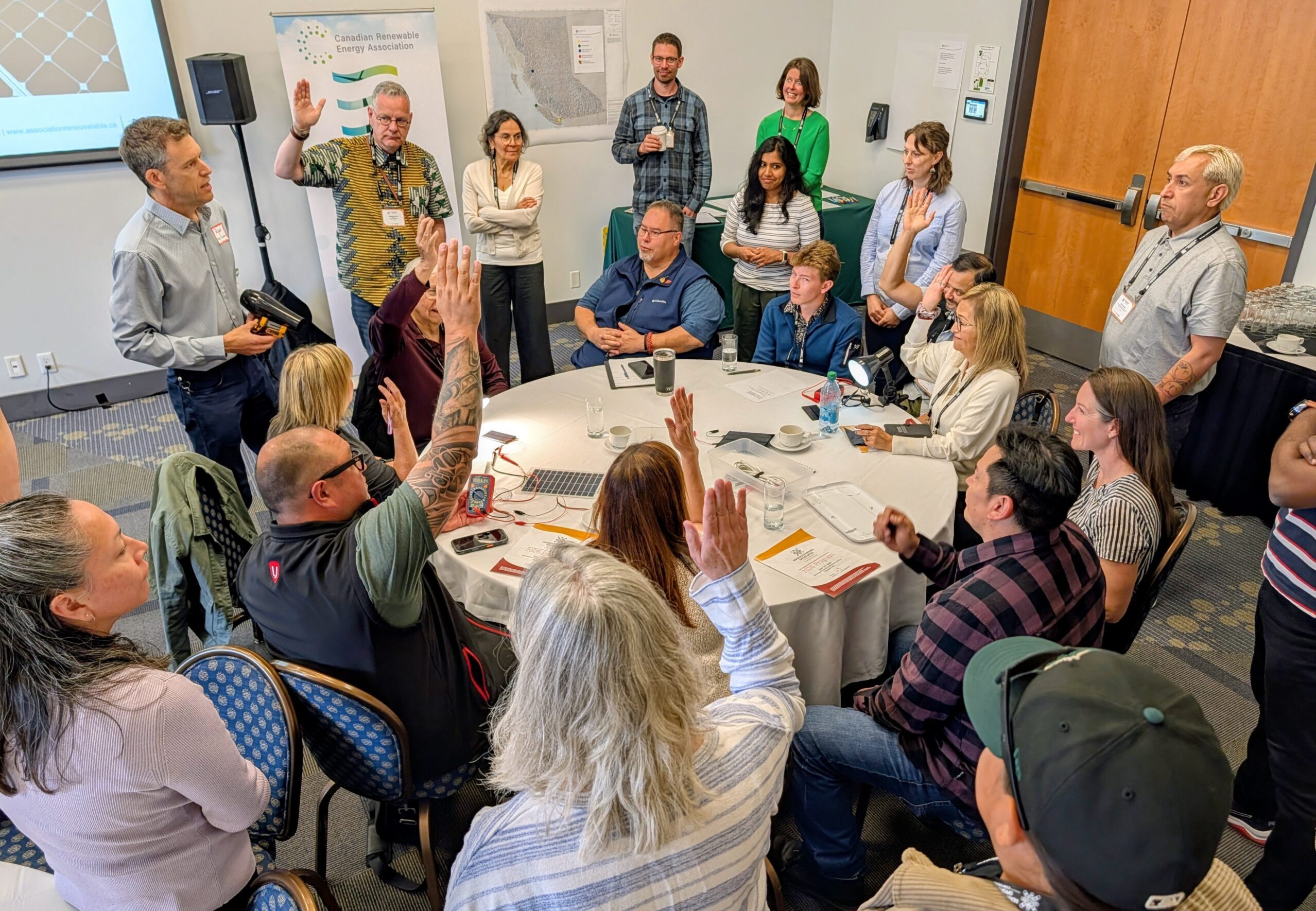
What are the major components of wind and solar projects and what are the jobs associated with building and operating them? How do these technologies actually work? Through hands-on science experiments, “Renewable Energy 101” provided participants with a uniquely entertaining and informative way to learn about wind and solar and bust some common myths and misperceptions.
Solar experiments
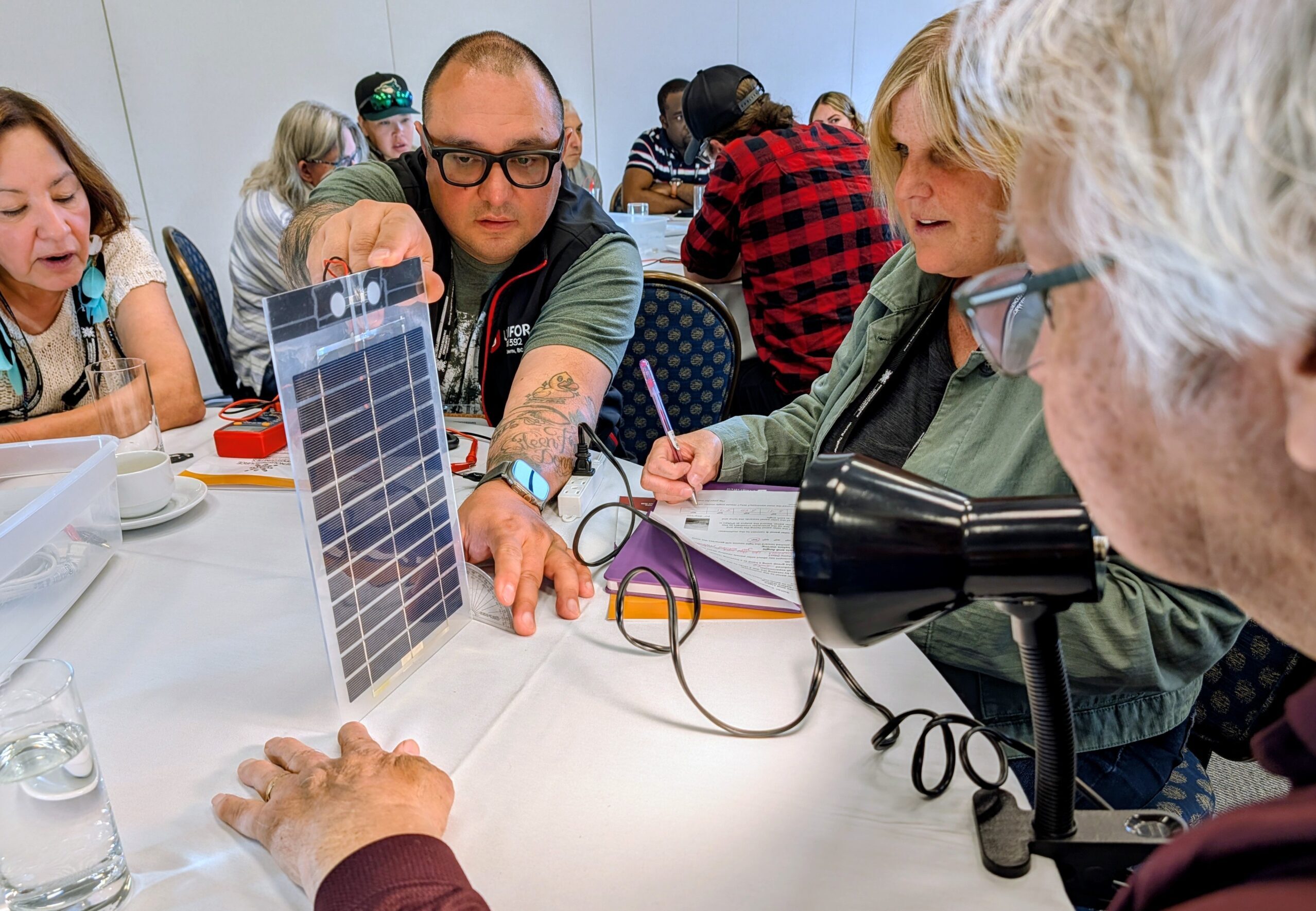
With small solar panels and a portable light representing the sun, participants tested the electricity production of solar panels at different angles and under different colours of light (blue is best). They also simulated the performance of solar panels in the shade, under a blanket of snow, and during hot weather (spoiler: the performance of solar panels drops as their temperature increases).
Wind experiments
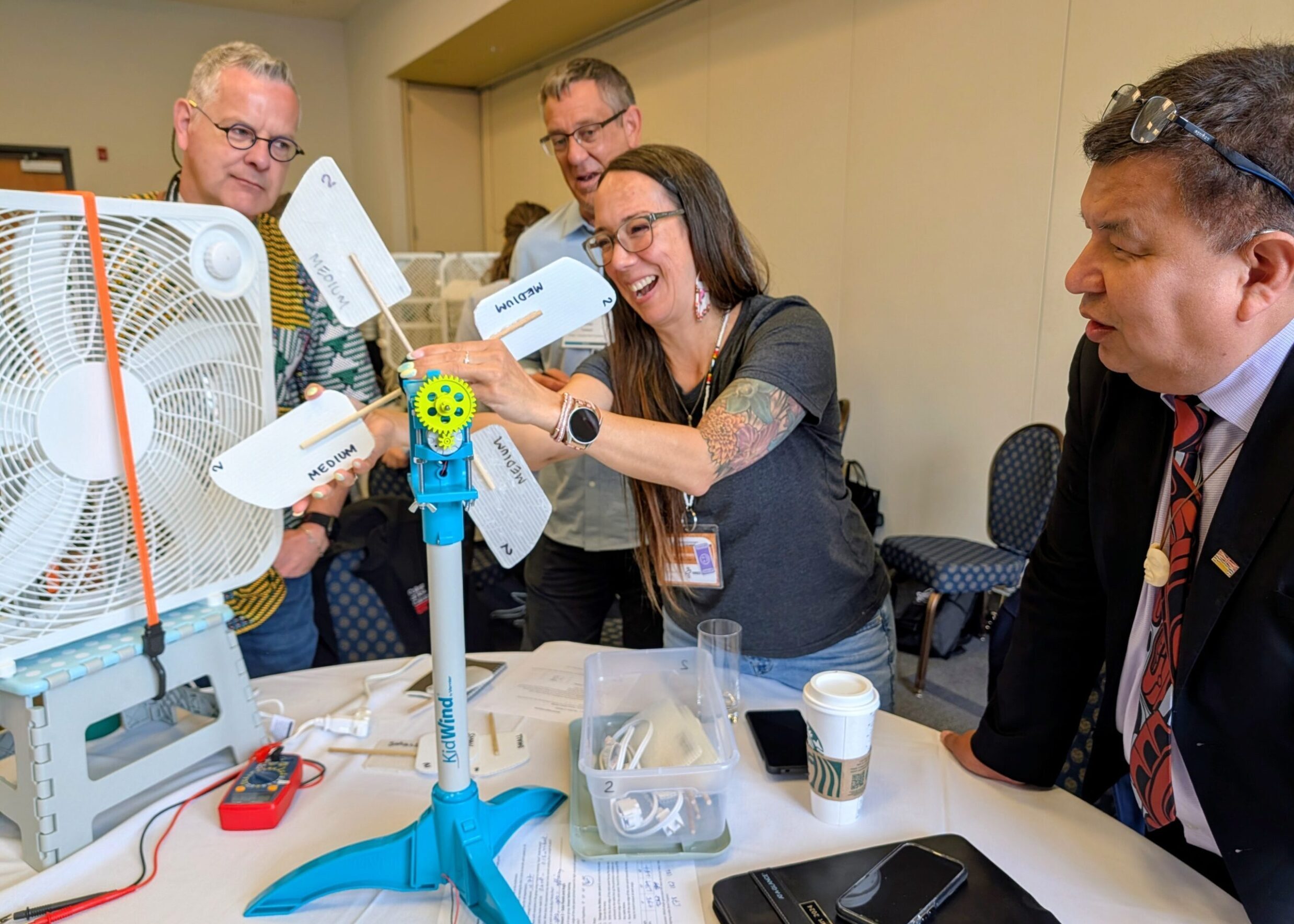
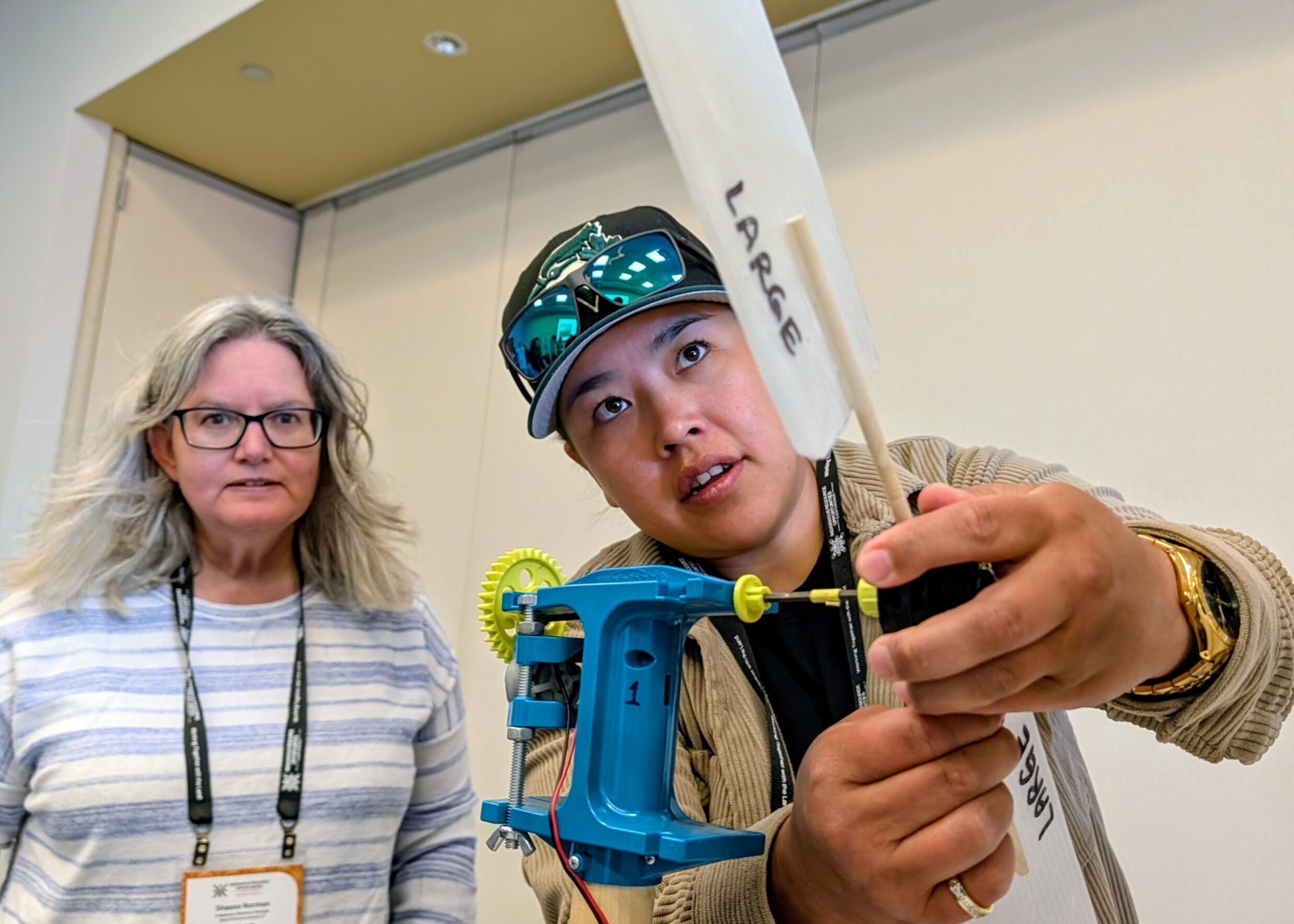
Participants built a small wind turbine and set it next to a box fan to test how the number and size of blades, as well as their angles of pitch, all affect electricity production. Each small group competed against the others to produce the most power from their wind turbine.
Keeping in Touch
Participants recognized that the multi-sectoral group brought together in Nanaimo represents the initiation of a regional cohort interested in advancing renewable energy opportunities on Vancouver Island. Continued engagement with the group is planned.
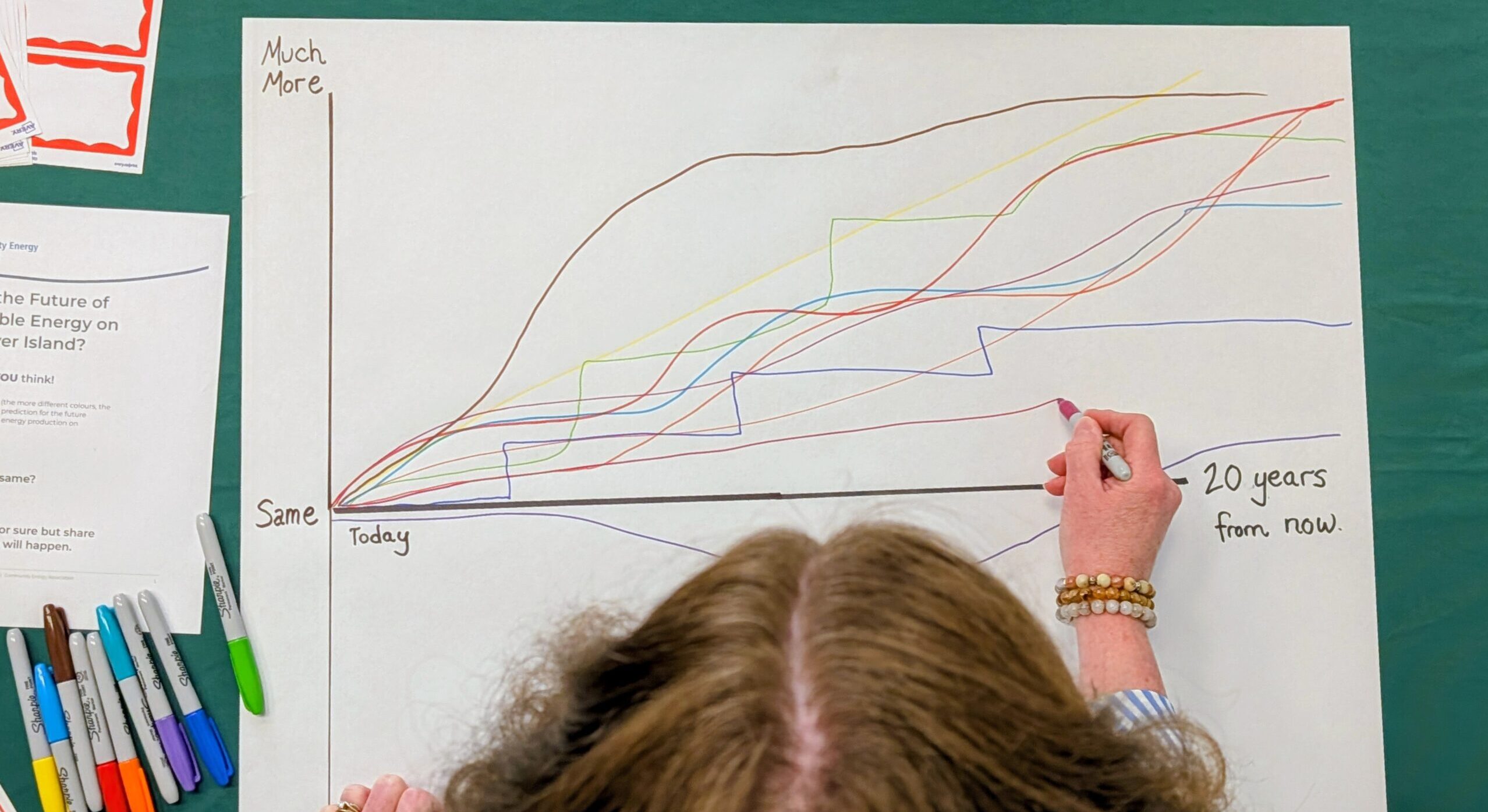
Participants shared their predictions for the future of renewable energy production on Vancouver Island over the next 20 years, with many believing that there will be “much more” in the years ahead.
Presented in partnership with: