Building the Opportunity for More Renewable Energy in the Southern Interior
Building the Opportunity for More Renewable Energy in the Southern Interior
Though mostly known for tourism and wine, BC’s Southern Interior is quietly becoming a renewable energy powerhouse. The emergence of the region as a “renewable energy powerhouse” was exciting to the participants in “Renewable Energy in the Southern Interior: A Power-ful Opportunity,” a workshop and dialogue that preceded the Keeping it Rural conference in Kelowna on June 10, 2026.
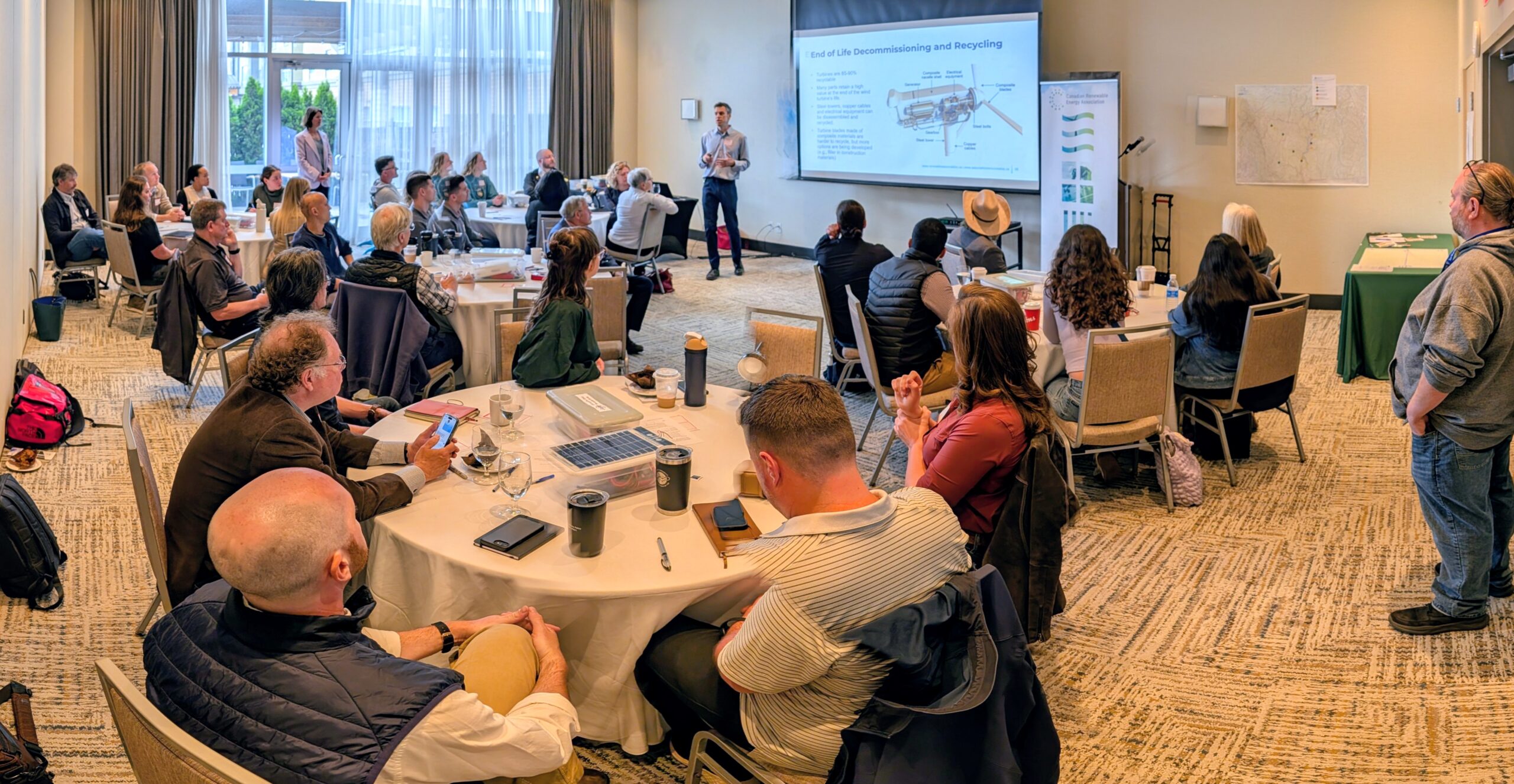
The packed session attracted representatives of local governments, First Nations communities, educational and research institutions, the Youth Climate Corps, energy companies, health care, the BC Energy Regulator, economic development organizations, service and supply companies, and the BC Rural Centre. Over the course of the event, they shared information about regional projects, learned how wind and solar technologies actually work, and planted seeds for a regional working group that could collaborate and advance regional renewable energy opportunities in the future.
Existing and Planned Projects
Through a facilitated discussion and an interactive mapping exercise, participants shared information about planned and operating renewable energy projects in the region. More than 30 projects were identified (the numbers beside each project indicate the mark on the map):
Solar (yellow):
RLI rooftop solar project in Coldstream (2), quA-ymn Solar Facility (5), Summerland solar and battery project (6), Solar on the Water Treatment Plant in Penticton (7), solar e-mobility charging at the Kelowna airport (8), Waneta Dam powerhouse (9), Princeton Arena (14), m.ah a temEEwuh (17), Seven Mile (20), Osoyoos Agrivoltaics (22), Penticton Indian Band (23).
Wind (green):
Shinish Creek (3), Pennask (4), Highland Valley (10), Mount Mabel (11), Tulameen (12), sniwt iʔ k̓ʷul̓mntn (15), Nicola (16), KZ (21)
More information about many of these wind and solar projects can be found at windandsolarbc.ca
Biomass (red):
Kamloops clean energy centre (18), Seven Mile Renewable Fuels (19), Sicamous district heating system (28), Revelstoke district heating system (29)
Geoexchange (gold quadrant):
Resort development (24), Hot pool resort (25), Multi-family residential building (26), six schools in Vernon (27)
Hydro and run-of-river (blue):
Lake Country water reservoir (1), multiple projects in the western part of the southern interior (not numbered or named)

Presented in partnership with:

The event was presented by Patricia Lightburn of the Canadian Renewable Energy Association, Relay Education’s Ryan Gander, and Rob van Adrichem of CEA.
Advancing Renewable Energy Together
Dialogue was organized around three questions meant to focus on regional priorities and benefits.
“Energy security and resiliency, by diversifying generation and combining the benefits of different energy sources that are reliable, stable, closer to home, and affordable.”
“Energy sovereignty that comes from Indigenous community projects. This is advancing reconciliation.”
“Making progress towards a sustainable future by shifting industry, providing local employment opportunities, decarbonizing power, and reducing our reliance on fossil fuels.”
“Reducing the climate impact from other forms of energy. This includes greenhouse gas emissions from fossil fuels and reducing the need for BC Hydro to disrupt watersheds.”
“Economic development generally - More jobs, both direct and indirect, and good use of Crown land with the potential for overlapping uses.”
“Tax revenue to local governments and economic impact to First Nations.”
“Rural self-reliance. We can meet our own energy demands.”
“More support for integration to the BC Hydro and Fortis grids, and continued build-out of transmission capacity. Fortis Electric needs to change its policy and accept renewables. BC Hydro needs to award more projects.”
“More grants and financial incentives, including for retrofits of existing facilities. Bring back Greener Homes, and Fortis needs to copy BC Hydro’s incentives.”
“A shift in public sensibilities, that recognize the advantages of renewable energy for communities. Community buy-in and understanding are critical.”
“Strategic partnerships and collaboration. And better coordination between BC Hydro, FortisBC, Government ministries, and others.”
“TRUST. It can only come from a focus on relationship-building.”
“Integrating a ‘cultural awareness approach’ to project development, taking care not to rush consultation. Good consultation = greater project success.”
“Planning for the required skills, expertise, and resources, with training at local schools. Education is a major hurdle to development.”
“More clarity is needed on what the opportunities are for municipalities.”
“Ensure commitments made during planning and early community engagement actually occur during construction and operation.”
“What needs to happen to capitalize on the renewable energy opportunity? We need to demand it. And then the political will to pursue it.”
“Workshops like this are great. We need more, and they should be expanded to include more members of the general public. People can’t vouch for this if they don’t understand it.”
“More networking to learn from each other, and we need to showcase existing projects in the area and how they’re doing.”
“We need community energy champions and for them to use successful projects as case studies.”
“Be clear about the skills, jobs, suppliers, and investment that are part of these projects. Local, local, local, and clarity on ‘why this project here.’”
“Communication needs to be a joint effort involving communities, partners, regulators, etc.”
“Will my bill go down with more renewables? Being close to renewable energy projects should lower local electricity prices like in Denmark.”
“Be real about the risks and honest about the ecological impact of wind turbines.”
“One word: results. Showcase actual projects with real data that recognize financial realities.”
De-Mystifying Renewable Energy Technologies
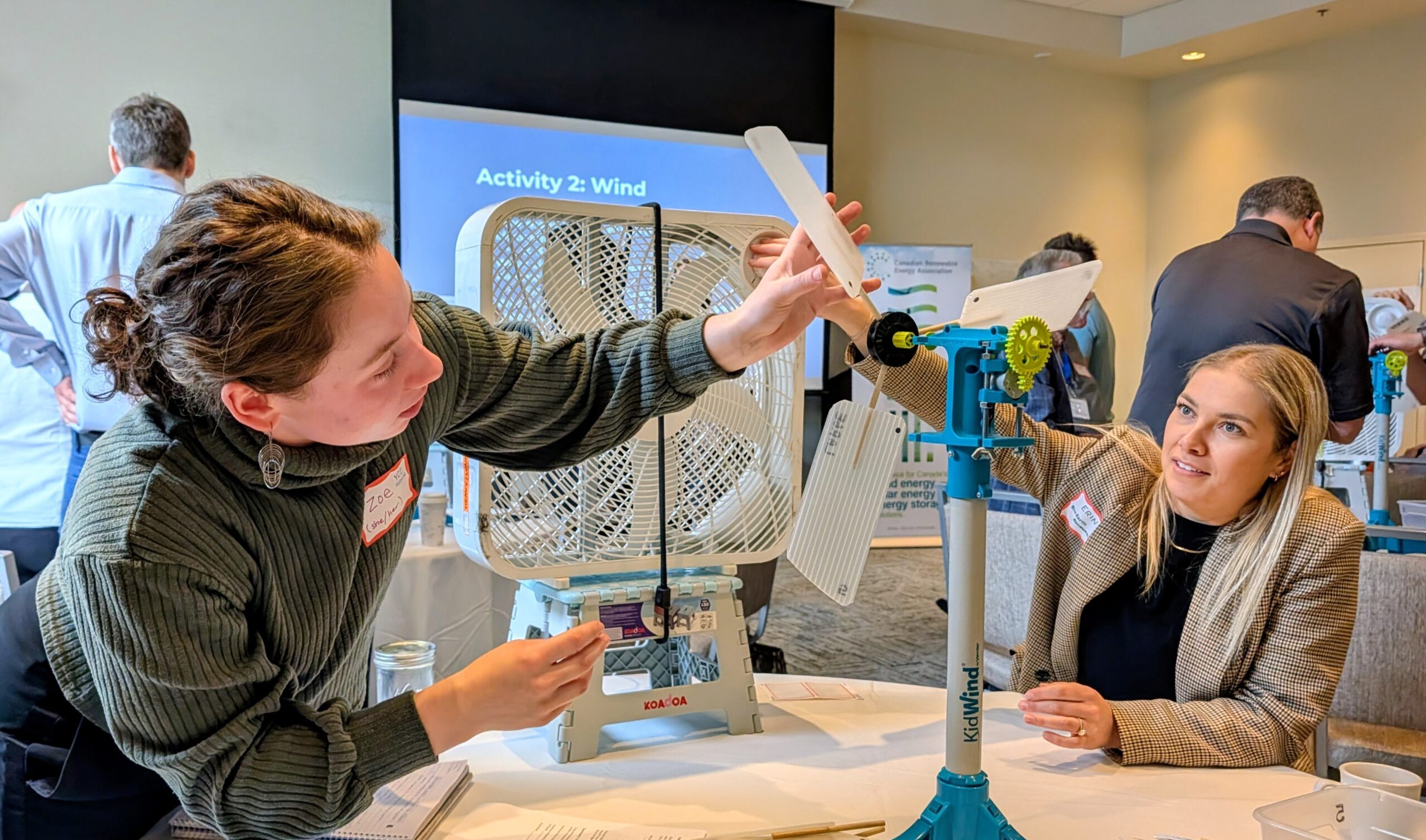
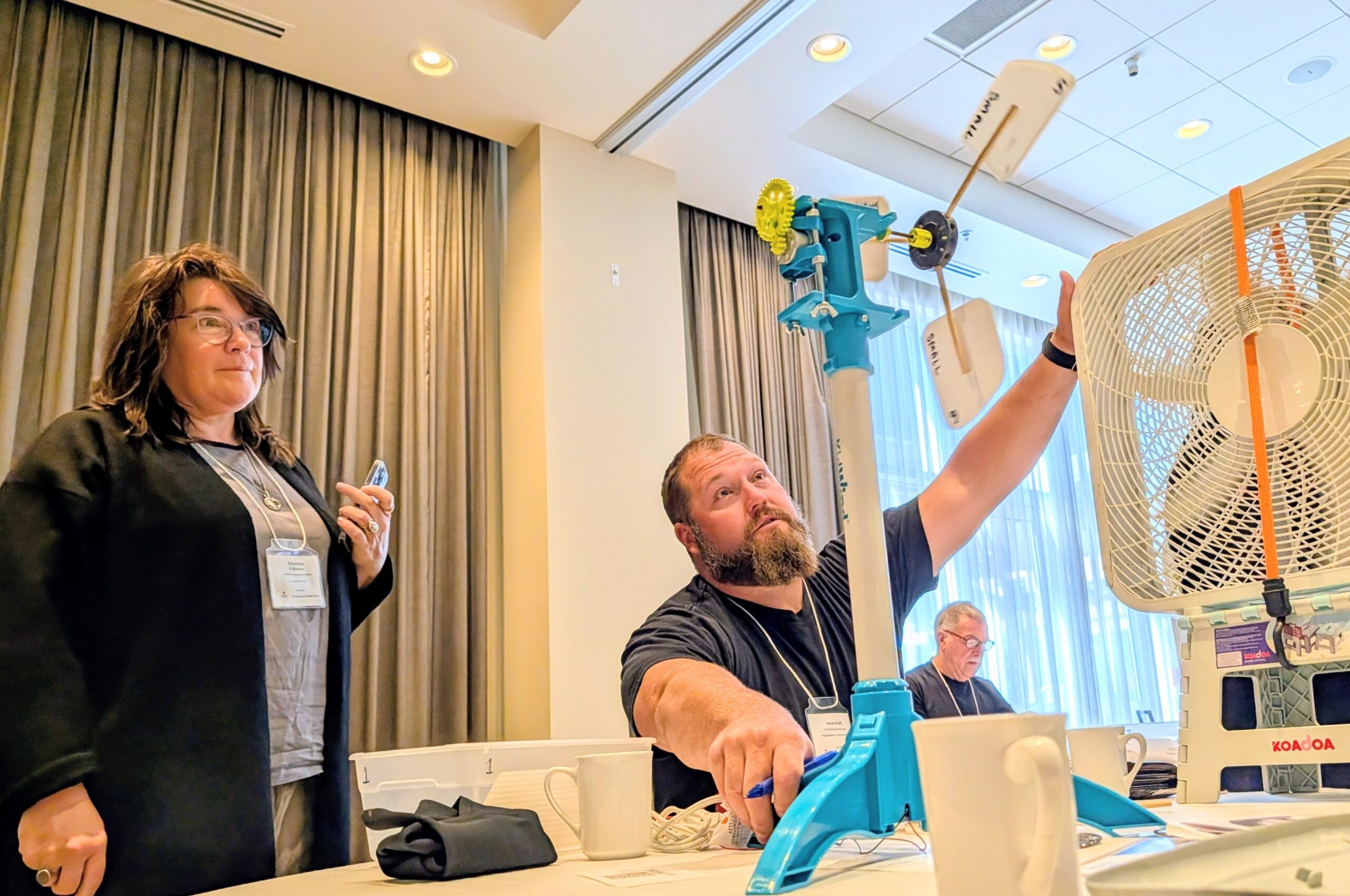
What are the major components of wind and solar projects and what are the jobs associated with building and operating them? How do these technologies actually work? Through hands-on science experiments, “Renewable Energy 101” provided participants with a uniquely entertaining and informative way to learn about wind and solar and bust some common myths and misperceptions. These experiments were also provided to Keeping it Rural delegates on June 11, 2026.
Solar experiments
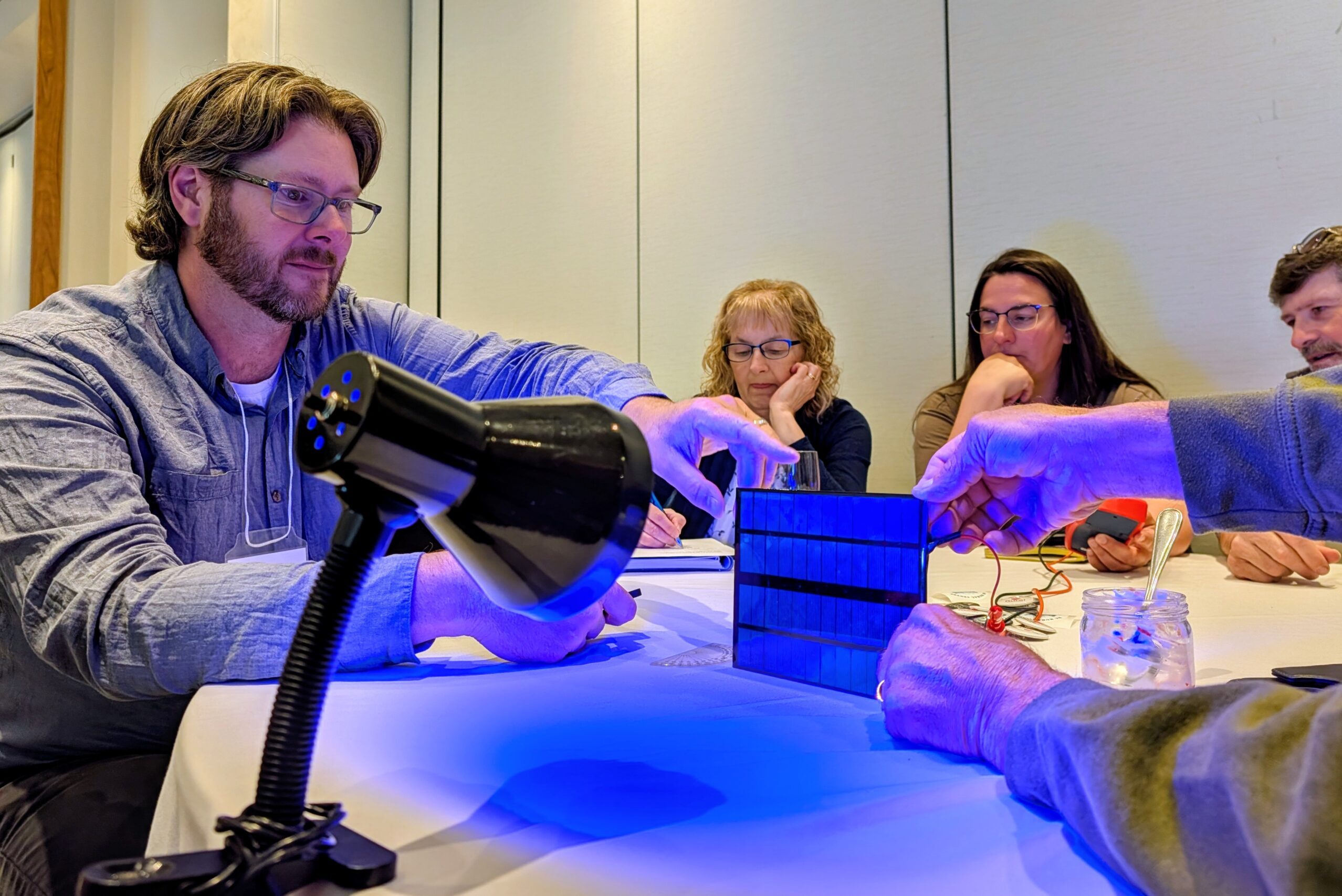
With small solar panels and a portable light representing the sun, participants tested the electricity production of solar panels at different angles and under different colours of light (blue is best). They also simulated the performance of solar panels in the shade, under a blanket of snow, and during hot weather (spoiler: the performance of solar panels drops as their temperature increases).

Wind experiments
Participants built a small wind turbine and set it next to a box fan to test how the number and size of blades, as well as their angles of pitch, all affect electricity production. Each small group competed against the others to produce the most power from their wind turbine.

Keeping in Touch
Participants recognized that the multi-sectoral group brought together in Kelowna represents the initiation of a regional cohort interested in advancing renewable energy opportunities in the Southern Interior. Continued engagement with the group is planned.


Resources
Slide deck from “Renewable Energy in the Southern Interior: A Power-ful Opportunity”
Contact information is included on slide 3.
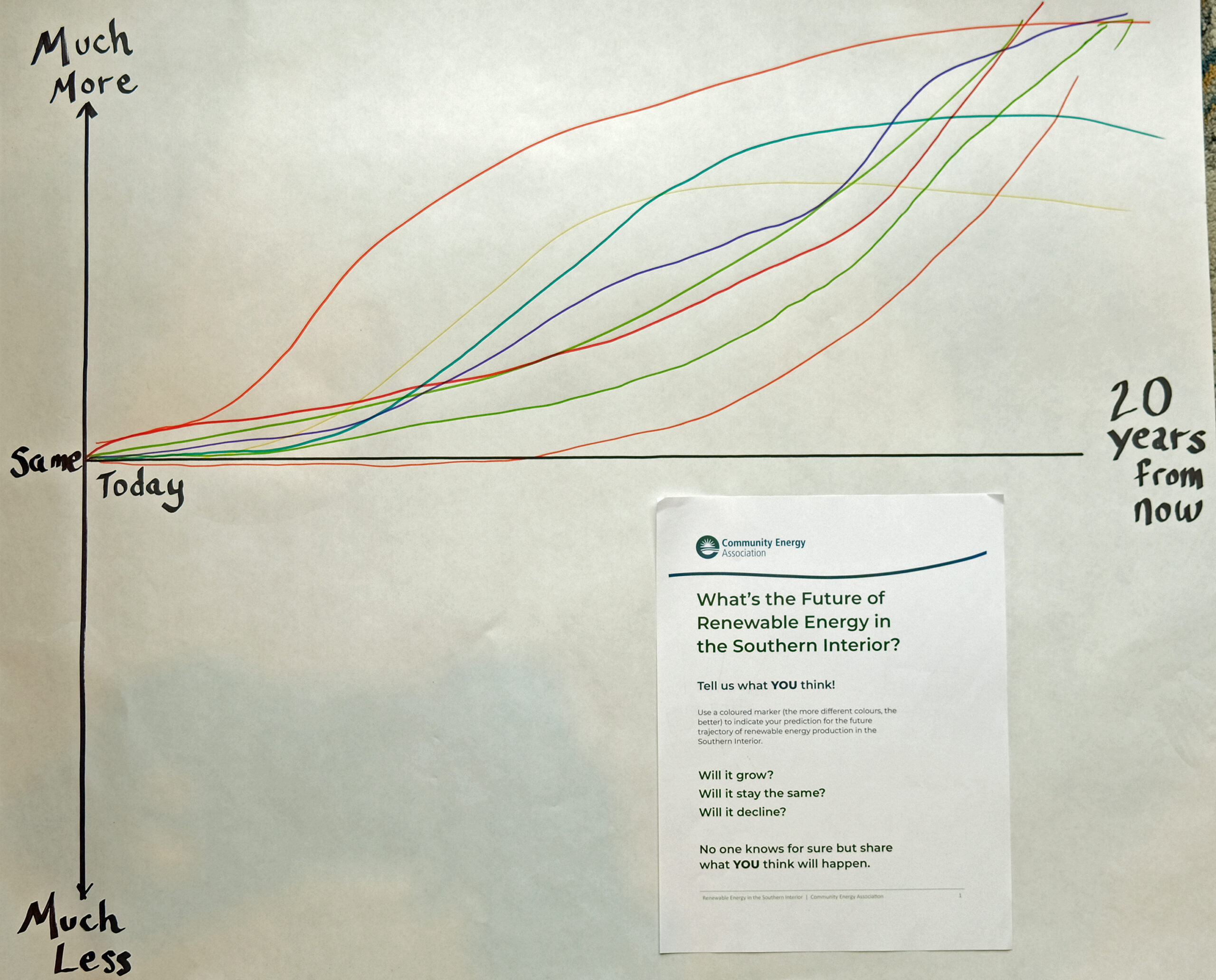
Participants shared their predictions for the future of renewable energy production in the Southern Interior over the next 20 years, with many believing that there will be “much more” in the years ahead.
Presented in partnership with: