Electric fleet helps Kelowna landfill dig into ZEV mandate
Case Study
Published: May 28, 2025
Updated: n/a
Relevant Topics: Policy, Transportation
The City of Kelowna adopted a Green Fleet Strategy in 2021 which focused on reducing emissions and improving energy efficiency of the City's corporate vehicle fleet. In early 2025, a new Sustainable Fleet Strategy further focused efforts on vehicle right-sizing, adoption of low-carbon technologies (e.g., EVs) and supportive infrastructure (e.g., charging) and exploring opportunities in emerging technologies such as hydrogen, and renewable diesel.
Kelowna Fleet Services team identified the landfill services as an ideal place to explore medium- and heavy-duty electrification opportunities, and to apply their learnings to the wider City fleet. Their work to action the Sustainable Fleet Strategy is a strong example of how collaboration and planning can ensure zero emissions vehicles are right-sized and appropriate for specific contexts.
Published: March 31, 2026
Updated: n/a
Relevant Topics: Electric Mobility
Climate Zone: 5
What They
Did
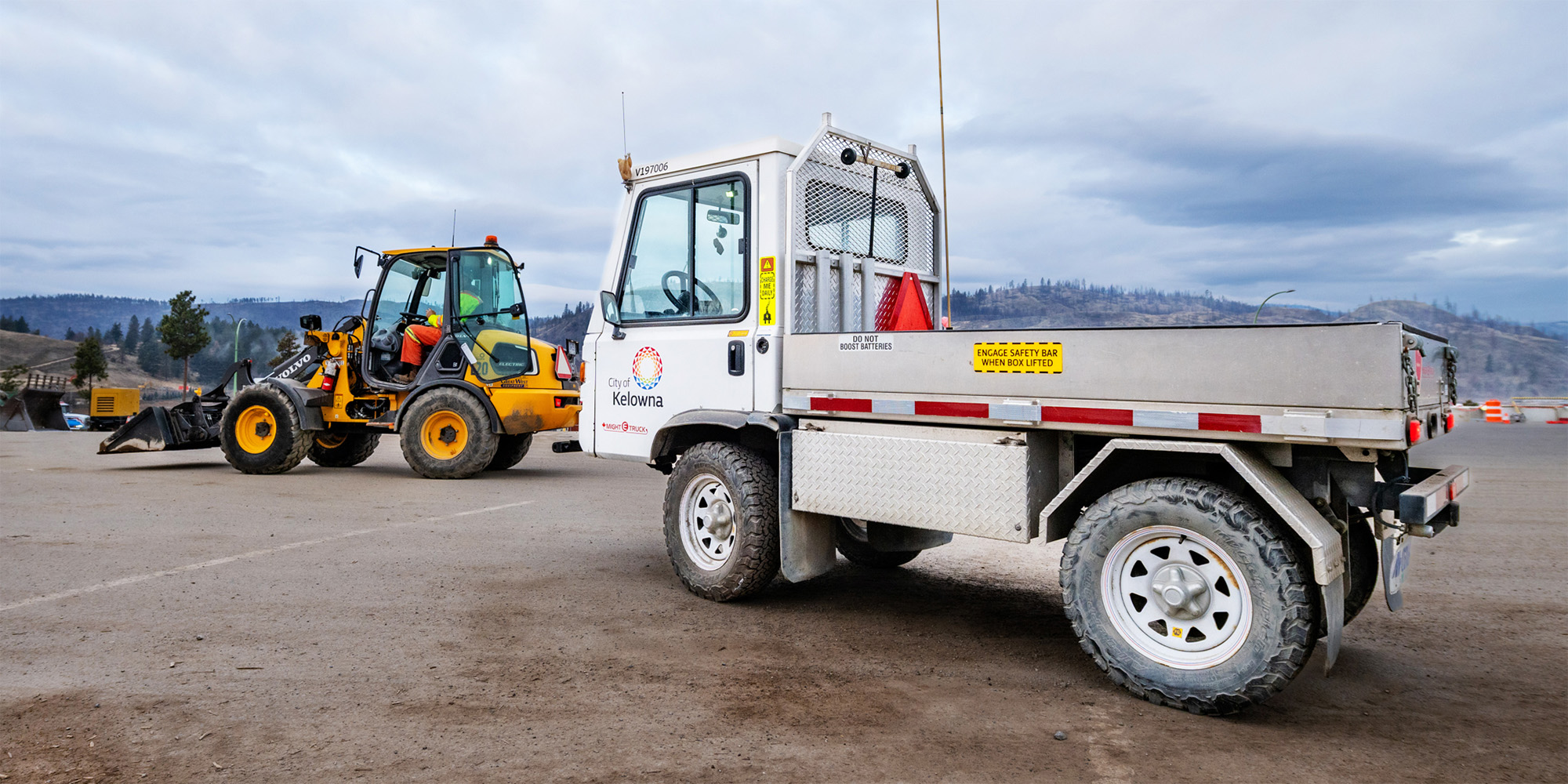
The City purchased its first ZEV to support Glenmore landfill operations in 2019 (a Might-E Truck). A hybrid diesel-electric dozer was added in 2020. The 2023 addition of a Volvo L20H Compact Electric Loader was so successful that in 2025 Kelowna became the first municipality in Canada to purchase a Volvo L120 full size Electric Loader.
These purchases were enabled by practical, future-looking plans and approaches:
- They future-proofed the landfill infrastructure by adding extra electrical service while other construction work was being carried out.
- They prioritized landfill fleet vehicles that had equivalent ZEV models in market already. This would allow them to be ready to replace diesel/gas vehicles at the end of their lifespan with readily-available ZEV models
- They did not rely on government incentives to justify purchasing vehicles, ensuring their recommended actions made sense irrespective what grants or policies were active (or not).
- This began with the purchase of a Might-E Truck in 2019, and a hybrid diesel-electric dozer in 2020.
- In 2023 Kelowna purchased a Volvo L20H Compact Electric Loader which has been so successful that in 2025 they became the first municipality in Canada to purchase a Volvo L120 full size Electric Loader.
These vehicles are serving as a learning experience on how to electrify other areas of the city fleet.
“At this stage, we can’t electrify an entire landfill operation. The equipment just isn’t available yet. But there are some places we can electrify and that’s what we have been focusing on.”
—Scott Hoekstra, Landfill and Compost Manager, City of Kelowna
| City Fleet | ZEVs | MHD ZEVs | Renew. Diesel | Chargers | |||||
| 500 | 60 | 5 | 200,000 L (2025) | 31+ |
| Landfill Fleet | ZEVs | MHD ZEVs | Renew. Diesel | Chargers | |||||
| 27 | 0 | 3 | 34,144 L (2025) | 1 |
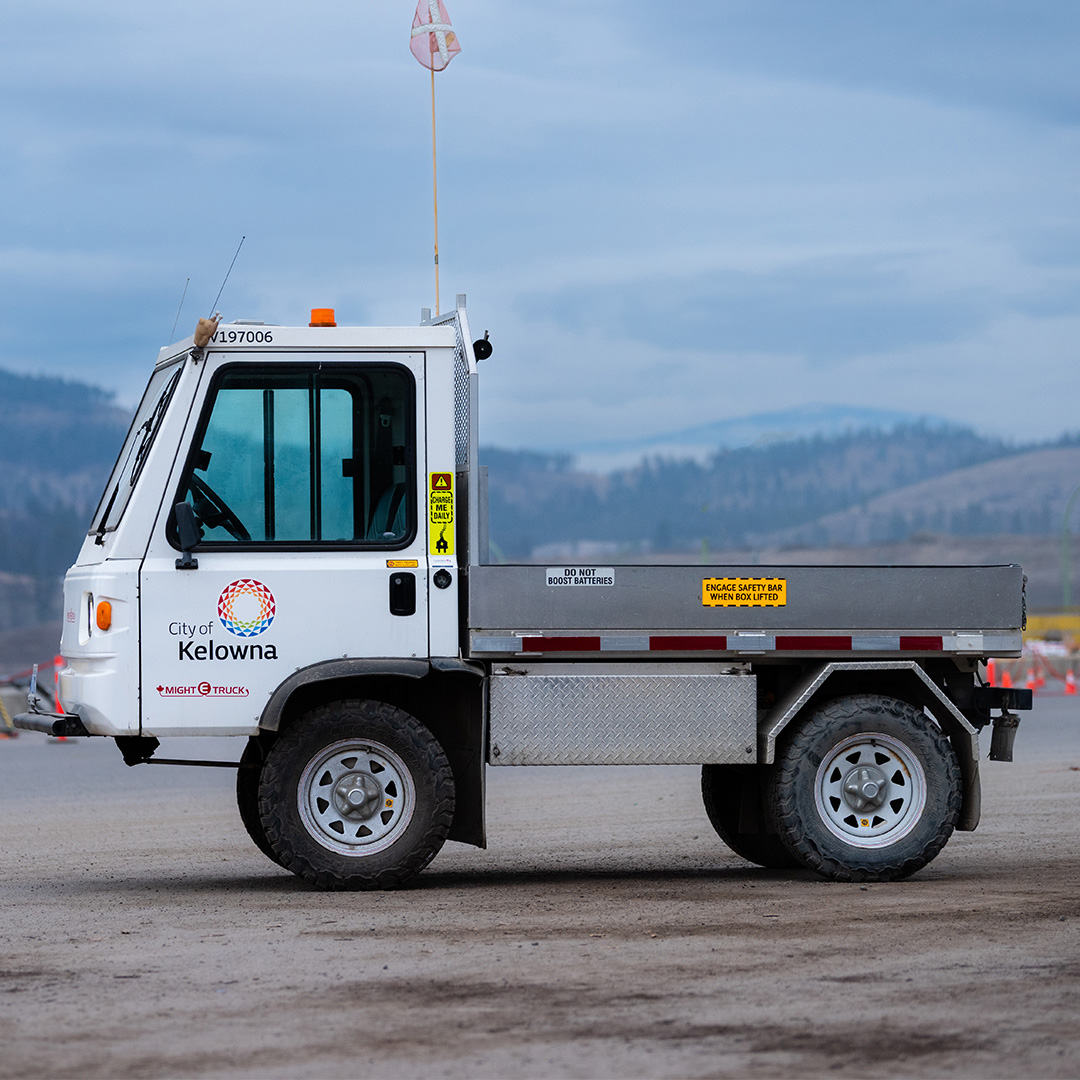
Can Might-E truck
Glenmore Landfill’s first MHDZEV was a Might-E truck which was purchased in 2019 for hauling, transporting, and loading materials within the facility.
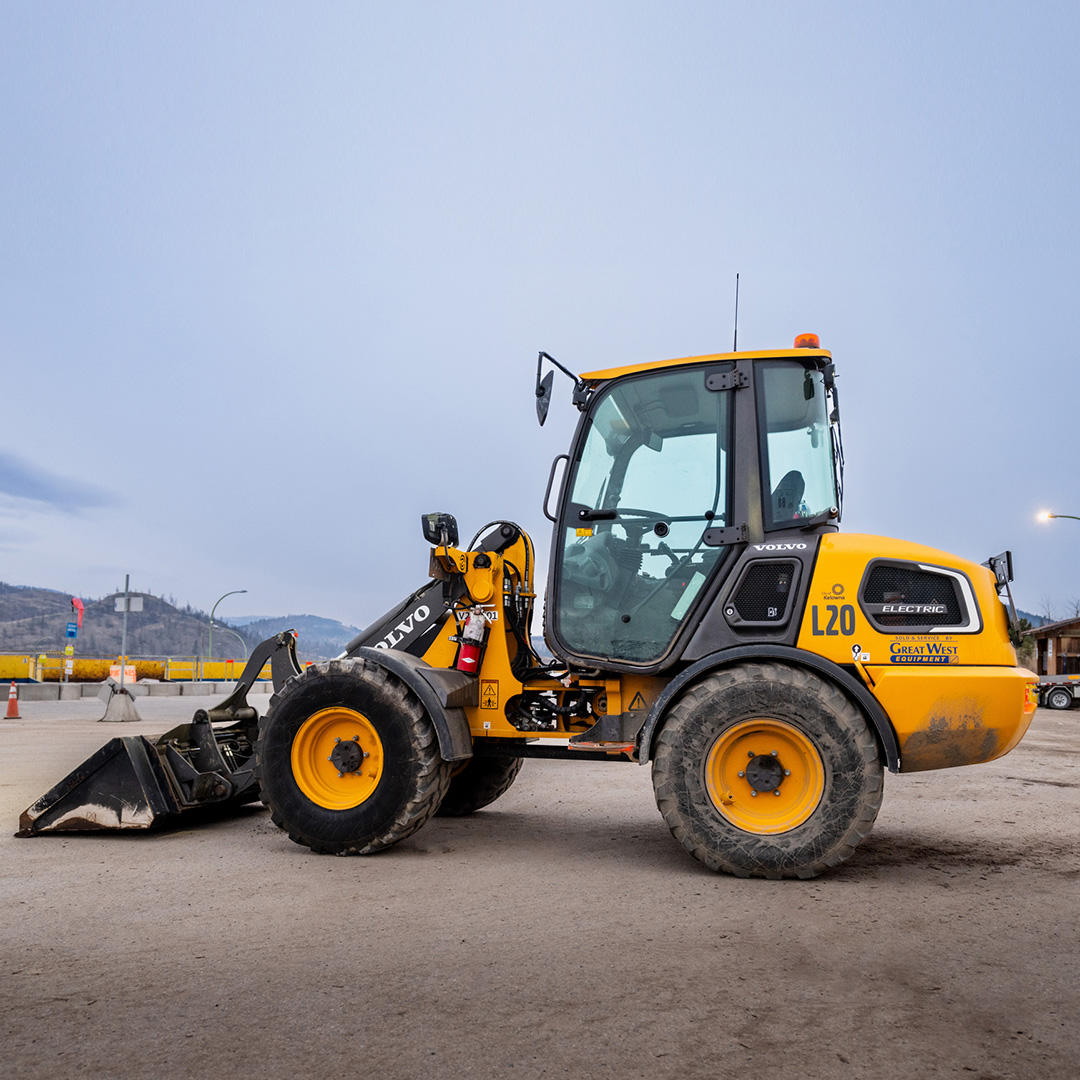
Volvo L20 Electric Compact Loader
With payload of 3,968 lbs, this loader acquired in 2023 is used for snow clearing, loading pickup trucks with compost, picking up small waste around site.
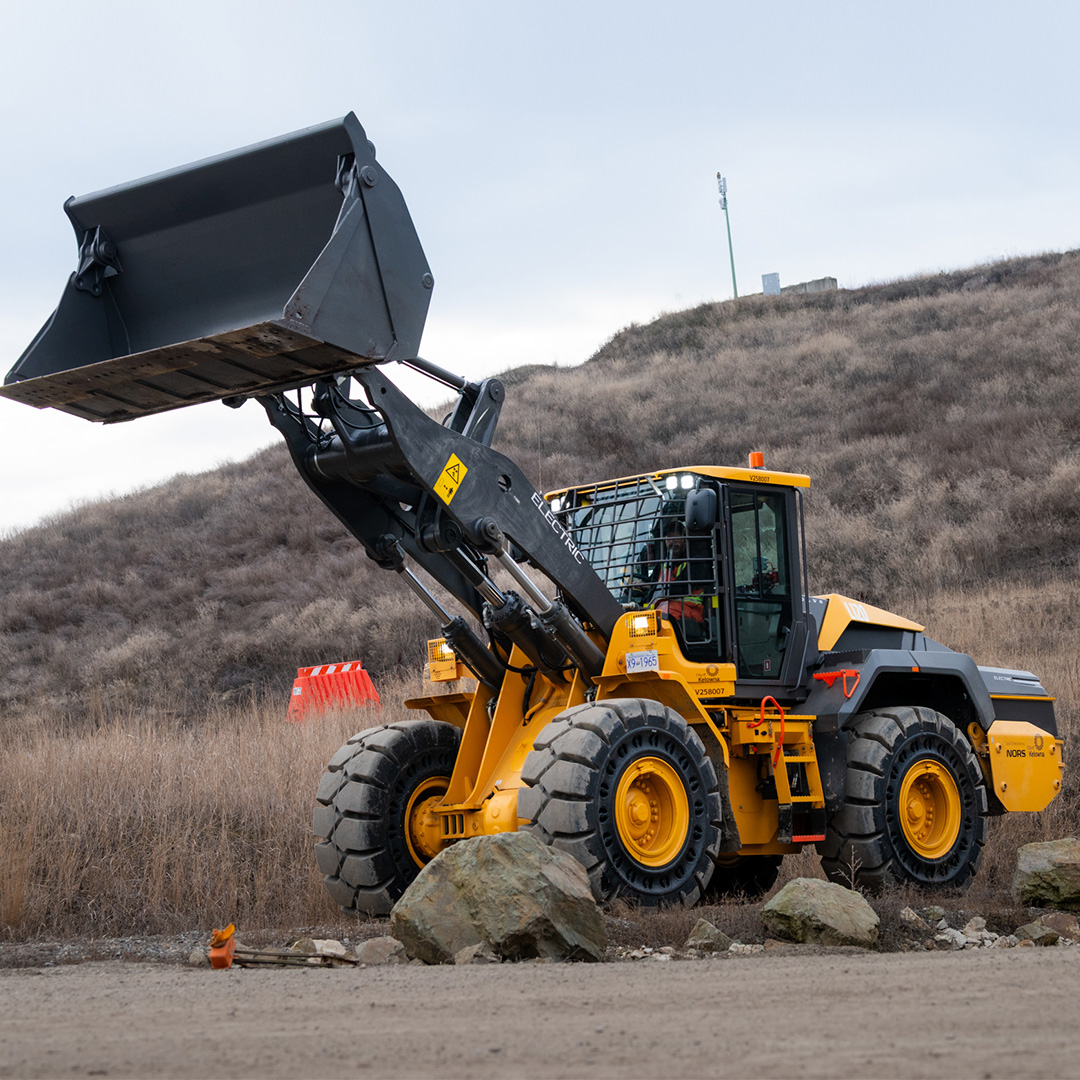
Volvo L120 Electric Loader (Full Size)
This 22-ton loader arrived in Kelowna in early 2026 and is used for general duties around the landfill site, with a payload of 14,550 lbs. After a month of operations it is meeting expectations for range and productivity. Kelowna is the first Canadian municipality to run this model.
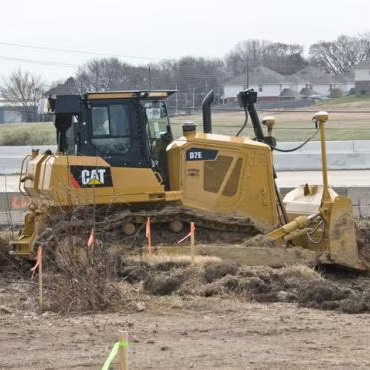
Caterpillar D7 E Hybrid Dozer
This hybrid electric-diesel dozer was a used 2014 vehicle that was purchased by Kelowna in 2020. It is used to construct the landfill more efficiently and closer to design, maximizing the lifetime of the landfill. It is much quieter than diesel loaders, meeting Glenmore Landfill’s desire to be a good neighbour to nearby residents.
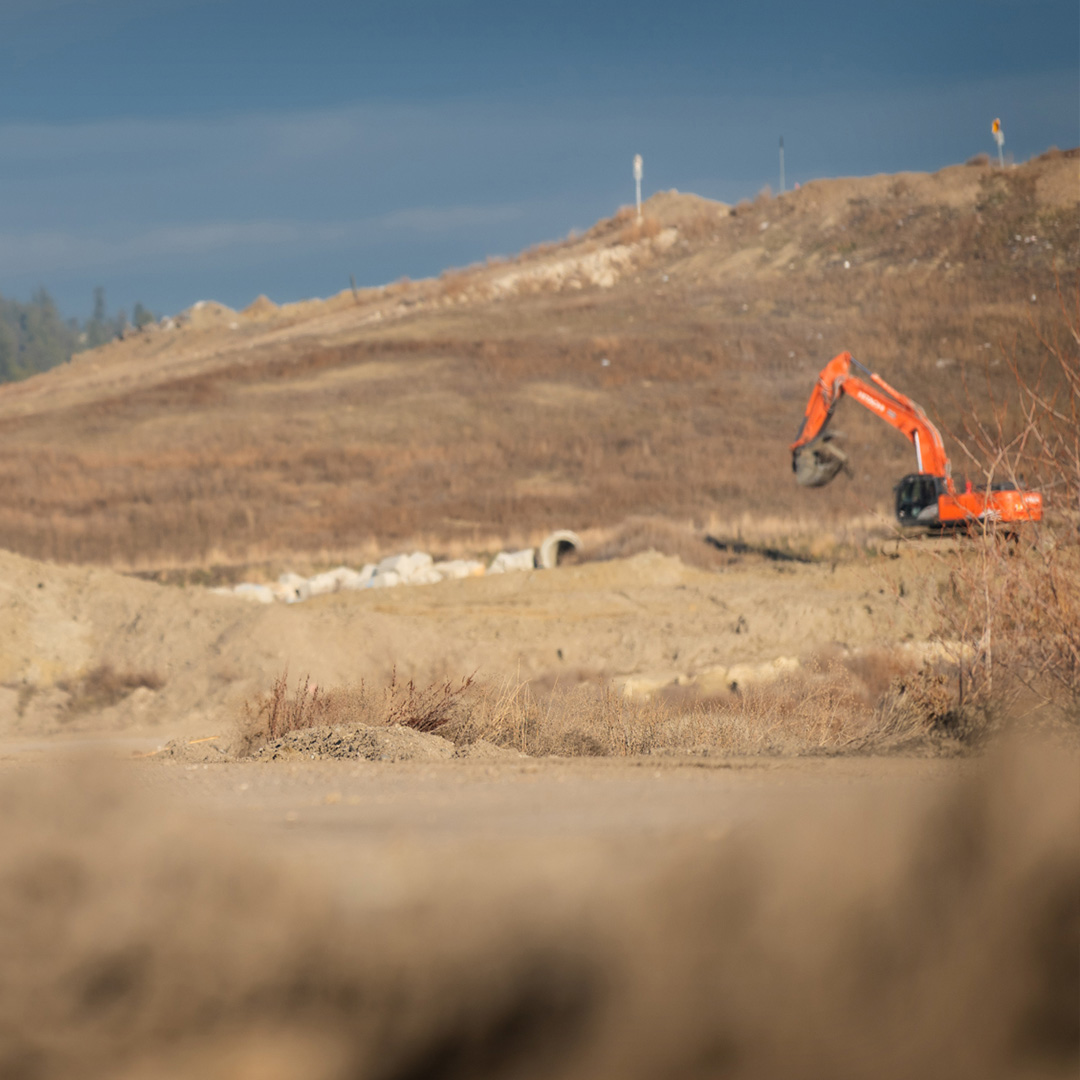
Glenmore Landfill
Glenmore Landfill serves as a regional waste management hub for 250,000 residents and businesses across the Central Okanagan. Open daily, it processes 300 tonnes of garbage per day. Its fleet of medium- and heavy-duty vehicles is in operation for around six hours per day to keep the landfill processes moving.
Projected to operate through to the year 2108, the landfill is owned and operated by the City of Kelowna, giving them the opportunity to make innovative changes that might not be possible if their landfill and equipment were owned by a sub-contractor.
How They
Did It
1. Internal collaboration
Manager of Fleet Services Kevin Grills started working with Manager of Landfill and Compost Scott Hoekstra around a decade ago to identify opportunities to decarbonize the landfill fleet. They both credit City leadership for supporting Kelowna’s Green Fleet Strategy (2021), and Sustainable Fleet Strategy in 2025.
With these strategies, the City endorsed adopting new technologies as soon as they become available, without retiring existing assets before the end of their useful life. There is a strong mandate for piloting new technologies and gathering data so informed decisions can be made in future.
Kevin Grills says this has translated into leadership support for innovative approaches and trying new technology where it makes sense.
He adds: “Sometimes, as a municipality, you just have to try things. If we’re not willing to test new technology, who will? Private contractors often don’t have the capital or the tolerance for downtime that comes with early adoption. Not everything will be a win — and that’s okay. That’s part of the process.”
This approach has led to them becoming the first municipality in Canada to run the Volvo L120e full size electric loader in 2026.
Kelowna is also using renewable diesel, which reduces emissions by up to 65% compared with petroleum diesel, but can be used in a regular diesel engine. Across the City fleet in 2025, a total of 200,000 L renewable diesel was used and in the landfill fleet a total of 34,144 L renewable diesel was used.
2. Created efficiencies by futureproofing new infrastructure
Kelowna upgraded electrical capacity in 2023 at Glenmore Landfill, knowing that heavy-duty EV equipment would operate at the site in the future.
Manager of Landfill and Compost, Scott Hoekstra, says that while chargers were not being installed at that time, a study was completed to project the next 20 years of electrical needs for the site and so it made sense to include electric vehicles. There were cost-efficiencies from extending the project scope and they are now prepared for the next 20 years of expansion and modernization.
He adds: “I give the fleets team a lot of credit for starting that conversation early and having us do that work as part of a bigger project. Having the ability to think about that early on was critical.”
3. Didn’t rely on incentives and grants
Knowing that rebates and grants can come and go with policy changes, Manager of Fleet Services Kevin Grills says he did not include incentives when making decisions on which vehicle to electrify. “When we try a new technology, we want the trial to have a lasting legacy, so that the economics will work for the next electric loader too, even if the grants go away.”
Results
1. Cost benefits
City of Kelowna had just finalized the budget to acquire an extra diesel front-end loader when they heard the Volvo electric version was available and would match their specifications. After redoing some calculations, they decided to electrify the loader based on the calculation that fuel savings alone will pay back the extra capital cost within eight to nine years – even without accessing any provincial or Federal incentives. They expect to own this machinery for more than 10 years, making the investment at least cost neutral.
The City is looking to further develop its systems to track maintenance, energy use and performance as part of the next stage of its Sustainable Fleet Plan. The landfill EVs break even time is expected to improve when those metrics are taken into consideration.
2. Learning for the future
Glenmore Landfill’s controlled, closed environment and established systems make it a good testing ground for new technologies, while also gaining understanding of how to cater to the needs of ZEVs. For instance, Glenmore’s layout was not designed for ZEVs, meaning that the operations take vehicles far away from the electrical service, making it impractical for heavy equipment to return to the main building for a lengthy mid-day charging break.
The learnings from operating the new vehicles will be used to inform the physical design and processes at other sites operated by the City.
The Landfill’s experience with the electric compact loader has also served as a catalyst for conversations with other departments. It has helped staff become more familiar with operating ZEVs beyond light-duty vehicles and consider how similar equipment could support work in other City operations. Now that the new full-sized loader is up and running there are plans to get operators from other areas of the City to try the landfill loader and consider it for their needs.
3. Good neighbours
Glenmore Landfill is located within a few hundred metres from a residential neighbourhood and Manager of Landfill and Compost Scott Hoekstra says the diesel-electric hybrid dozer’s quieter engine has decreased noise levels on weekend mornings when it is the main vehicle at work. As more diesel vehicles are replaced with ZEVs, he hopes the reduced noise levels will be noticeable across the operating hours.
He adds: “From the landfill perspective, we’re looking at electrification through a long-term lens. It’s not just about emissions; I also value the quieter nature of electric equipment. One of the biggest challenges we face is being a good neighbour — managing noise, odours, dust. So if we can reduce one of those impacts, that’s a significant benefit for us.”
Volvo JL120 Electric
Full Size Loader
This 22-ton loader arrived in Kelowna in early 2026 and is used for general duties around the landfill site, with a payload of 14,550 lbs. After a month of operations it is meeting expectations for range and productivity. Kelowna is the first Canadian municipality to run this model.
| Price | $792,630 | Rebates | 0 | ||
| Purchased in 2026 | None accessed | ||||
| Operational Savings | Not yet quantified | ||||
| Expected Lifespan | 10 years | Projected ROI | 8–9 years |
| Advertised Range | 5–9 hours | Realized Range | 5–9 hours | ||
| Daily Use | 5–6 hours | ||||
| 30% charge left after 8 hour shift | |||||
| Battery | 282 kWh | Charge Time | 2 hours | ||
| Overnight with top-up during lunch break | |||||
| Cold weather impact | No observations yet. |
Volvo L20H
Compact Loader
Compact Loader
With payload of 3,968 lbs, this loader acquired in 2023 is used for snow clearing, loading pickup trucks with compost, picking up small waste around site.
| Price | $198,677 | Rebates | 0 | ||
| None accessed | |||||
| Operational Savings | Not yet quantified. | ||||
| Expected Lifespan | 10 years | Projected ROI | 8–9 years |
| Advertised Range | 4–6 hours | Realized Range | 6 hours | ||
| Daily Use | 1 hour | ||||
| Battery | 40 kWh | Charge Time | 7 hours | ||
| Cold weather impact | No observations yet. |
CanEV Might-E Truck
Low-Speed Vehicle
Glenmore Landfill’s first MHDZEV was a Might-E truck which was purchased in 2019 for hauling, transporting, and loading materials within the facility.
| Price | $52,757 | Rebates | $5,000 | ||
| Plug In BC, Specialty Use Vehicle Incentive | |||||
| Operational Savings | Not quantified yet. | ||||
| Expected Lifespan | 10 years | Projected ROI | 8–9 years |
| Advertised Range | 90 km | Realized Range | Not applicable | ||
| Daily Use | 3.5 km | ||||
| Over short distances | |||||
| Battery | 12 x 6V | Charge Time | Overnight | ||
| Cold weather impact | Can go a few days without charging. |
Contributors

Andrew King
Project Manager (Transportation)
Community Energy Association

Rebecca Edwards
Communications Lead
Community Energy Association
Contributors
Andrew King
Project Manager (Transportation)
Community Energy Association
Rebecca Edwards
Communications Lead
Community Energy Association
Funding for this case study provided by:



Related Content
Fort St. John North Peace Museum is saving on energy to invest in programming
The North Peace Historical Society installed solar panels on the roof of the museum in Fort St. John as part of a strategic effort to reduce operating costs and channel the annual savings into additional local capacity in support of the organization’s mission.
