Coming Together to Explore Opportunities for Renewable Energy at the BC Natural Resource Forum
Local and regional resiliency, energy self-sufficiency, economic development, pride and leadership, reconciliation at work – these are some of the benefits of renewable energy identified by the participants of a dialogue held in Prince George prior to the kick-off of the BC Natural Resources Forum.
Renewable Energy in Northern BC: A Power-ful Opportunity brought together renewable energy businesses, community representatives, researchers, and other organizations to identify existing projects in Northern BC, why more are needed, and how communities can participate and benefit.

Current and Planned Projects
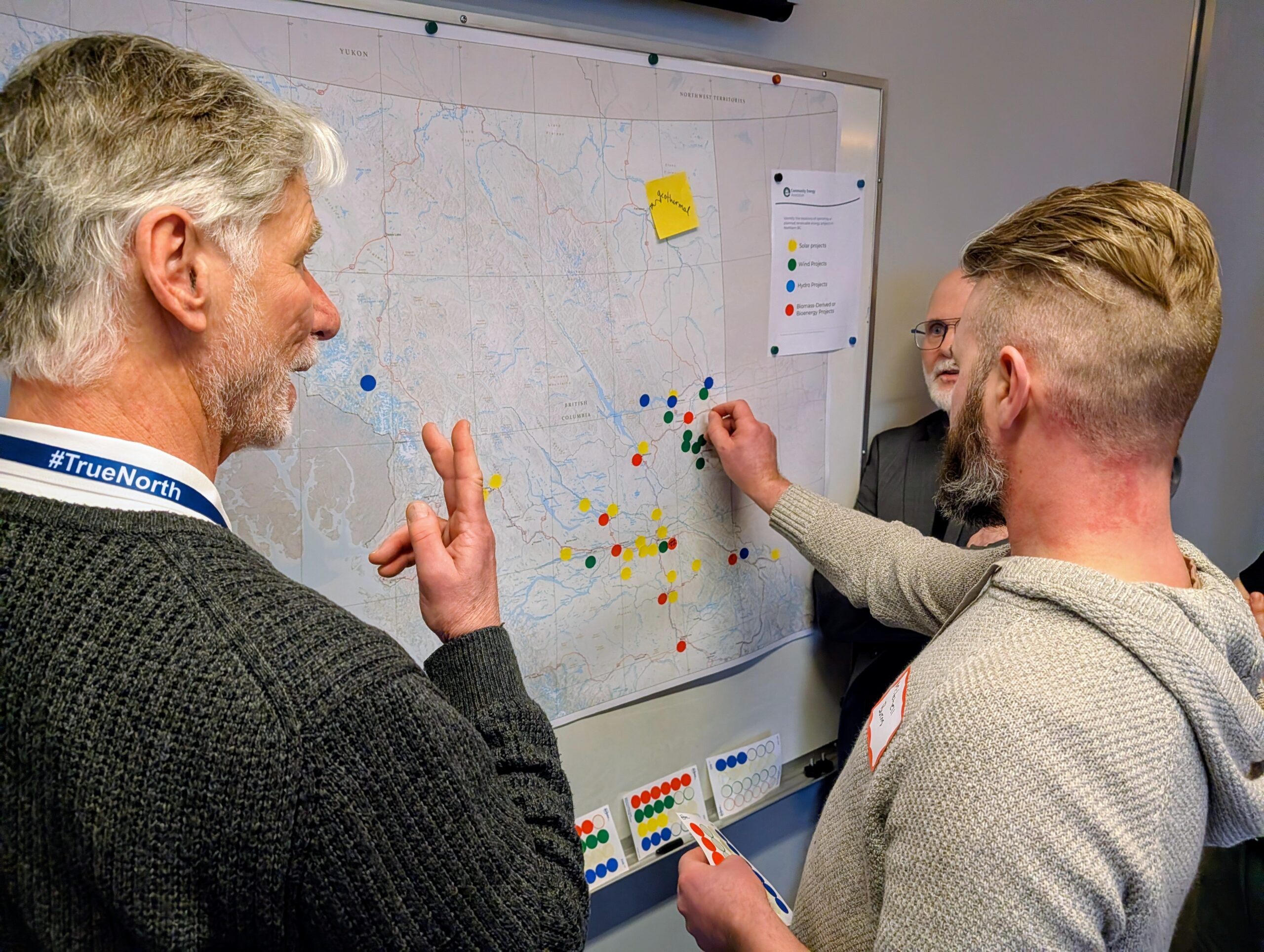
Participants identified the location of existing and planned renewable energy projects on a map of northern BC. Nearly 50 solar, wind, hydro, bioenergy, and geothermal projects were identified, and stimulated discussion and information-sharing about the projects.
More information about wind and solar projects is available at windandsolarbc.ca
Presented in partnership with:

Advancing Renewable Energy Together
Participants shared their perspectives on the local and regional benefits of renewable energy development and how to strengthen connections between the industry and communities. Some highlights:
Resilience and energy sovereignty
“Self-sufficiency through local generation and diversification, especially in remote communities and with increasing climate disasters. Keeping the energy dollars in the area.”
Regional economic development
“The ability to promote and facilitate economic development without sacrificing the environment or human health, and that helps in combatting climate change. The chance to create local jobs preparing and maintaining renewables.”
Indigenous economic development opportunities and reconciliation
“Energy development represents the future of the nation where I work by providing economic development opportunities and a source of revenue.”
Legacy
“Can create a proud legacy for all British Columbians: can provide economic stability globally, regional development, and infrastructure that will continue to grow.”
Shift the narrative
“Change the way we talk about renewables. We should present it as an economic development tool that secures local energy, lowers costs, and drives growth. It goes beyond emissions reduction.”
Clear investment pathways
“We need a survey of demand, to build a forecast that will show economic demand for new projects and meet global environmental expectations. It will also serve our region’s sovereignty and reconciliation needs.”
Improve funding and approvals
“Adopt a ‘rural lens’ to address local specific issues/needs. A clearer and simpler process for project applications with BC Hydro. Have BC Hydro recognize multiple individual projects from one proponent.”
Information-sharing
“Publish more data from successful projects, which clearly illustrate the benefits. Share stories about projects that have gone ahead and what their impact has been.”
Innovative partnerships
“Peer-to-peer learning among local governments. Create opportunities to build cooperation and willingness to work with other stakeholders such as industry, Indigenous leaders, researchers.”
Clarify the message
“Focus on messages that shift the narrative from ‘global climate targets’ to local self-sufficiency and local economic benefits. Emphasize stable and consistent electrical supply.”
“Non-polluting energy creation in our backyard, with stable long-term employment and cost savings for everyone.”
Advocacy
“Use groups like NorthCAN to advocate at the government level.”
“Peer-to peer learning and support between local governments and other like-minded groups”
Share local stories
“Showcase examples of the community building that is an outcome of renewable energy projects. Host site tours with other communities, include local people to share their story. Attend association conferences.”
Be deliberate
“Use both social media and traditional means including workshops. Billboards; Facebook videos as ads; use Destination BC to tell the story.”
De-Mystifying Renewable Energy Techniques
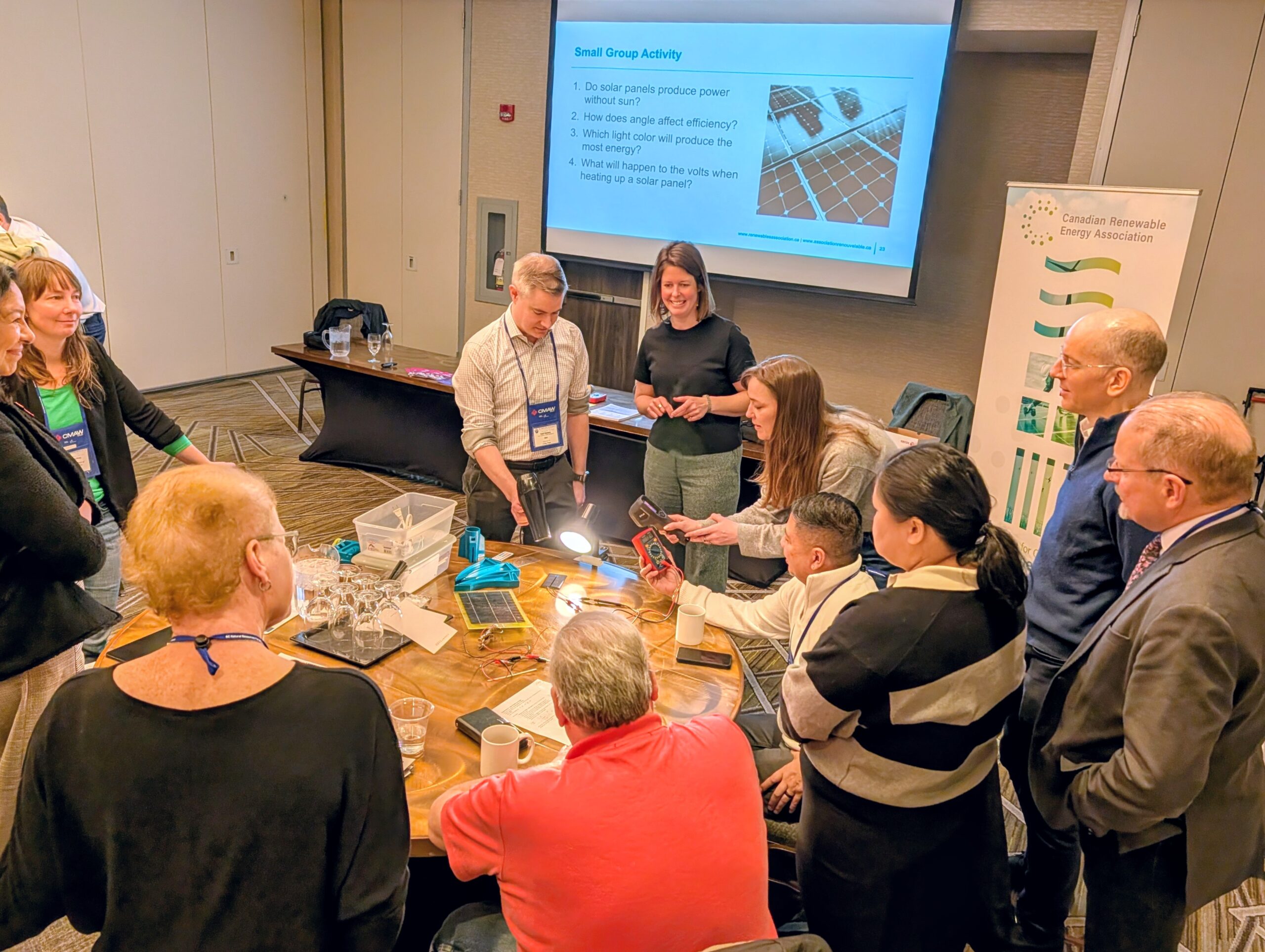
On the same day as the dialogue on renewable energy in northern BC that was hosted by CEA, the Canadian Renewable Energy Association (CanREA) and Relay Education hosted a hands-on workshop that exposed the science behind how solar panels and wind turbines actually work. The program helped kick-off Wind and Solar BC, a CanREA public information campaign.
Solar experiments
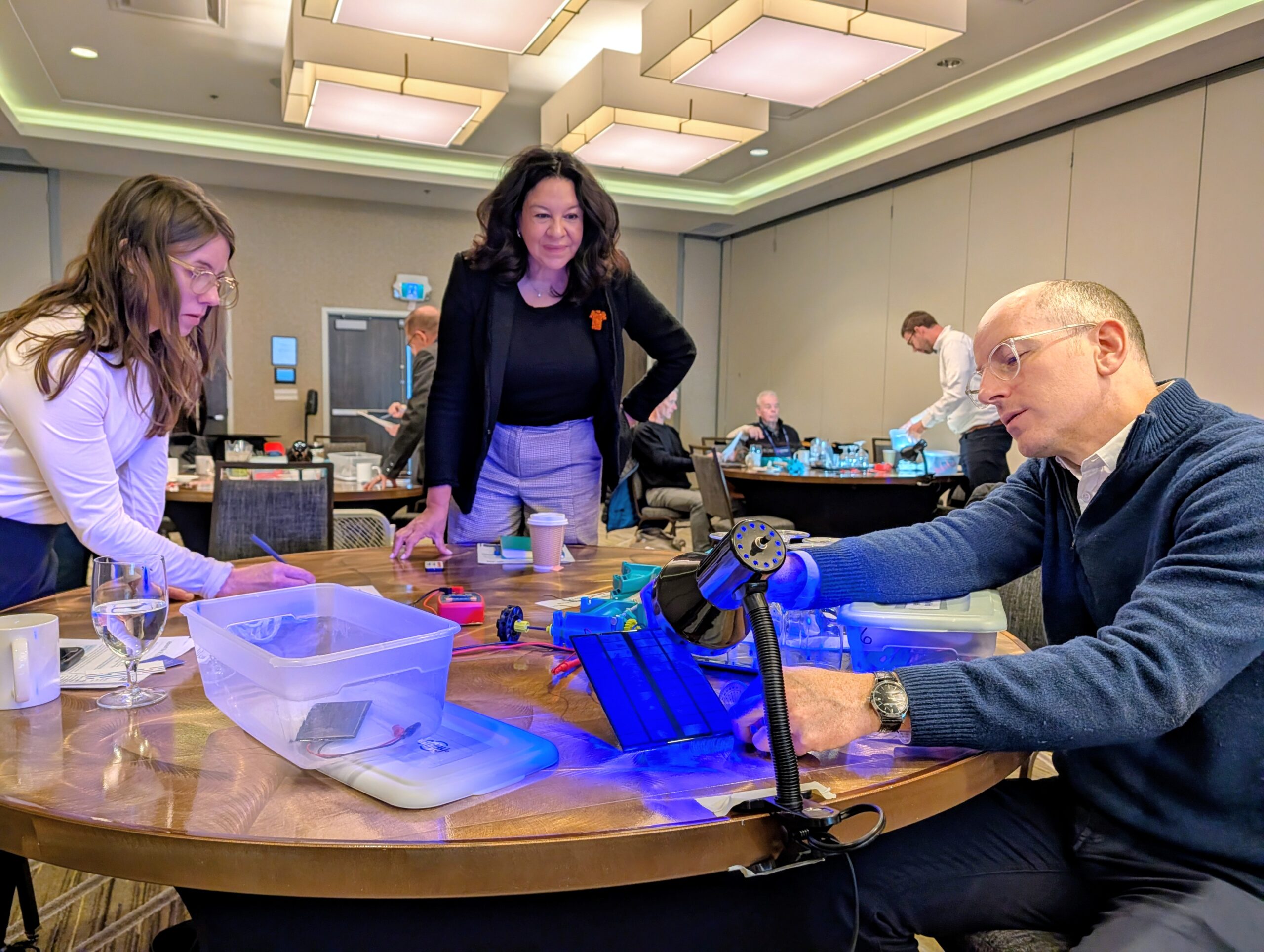
With a couple of sample solar panels and a portable light representing the sun, participants tested the electricity production of solar panels at different angles and under different colours of light. They also simulated the performance of solar panels in the shade, when heated, and during a rain shower.
Wind experiments
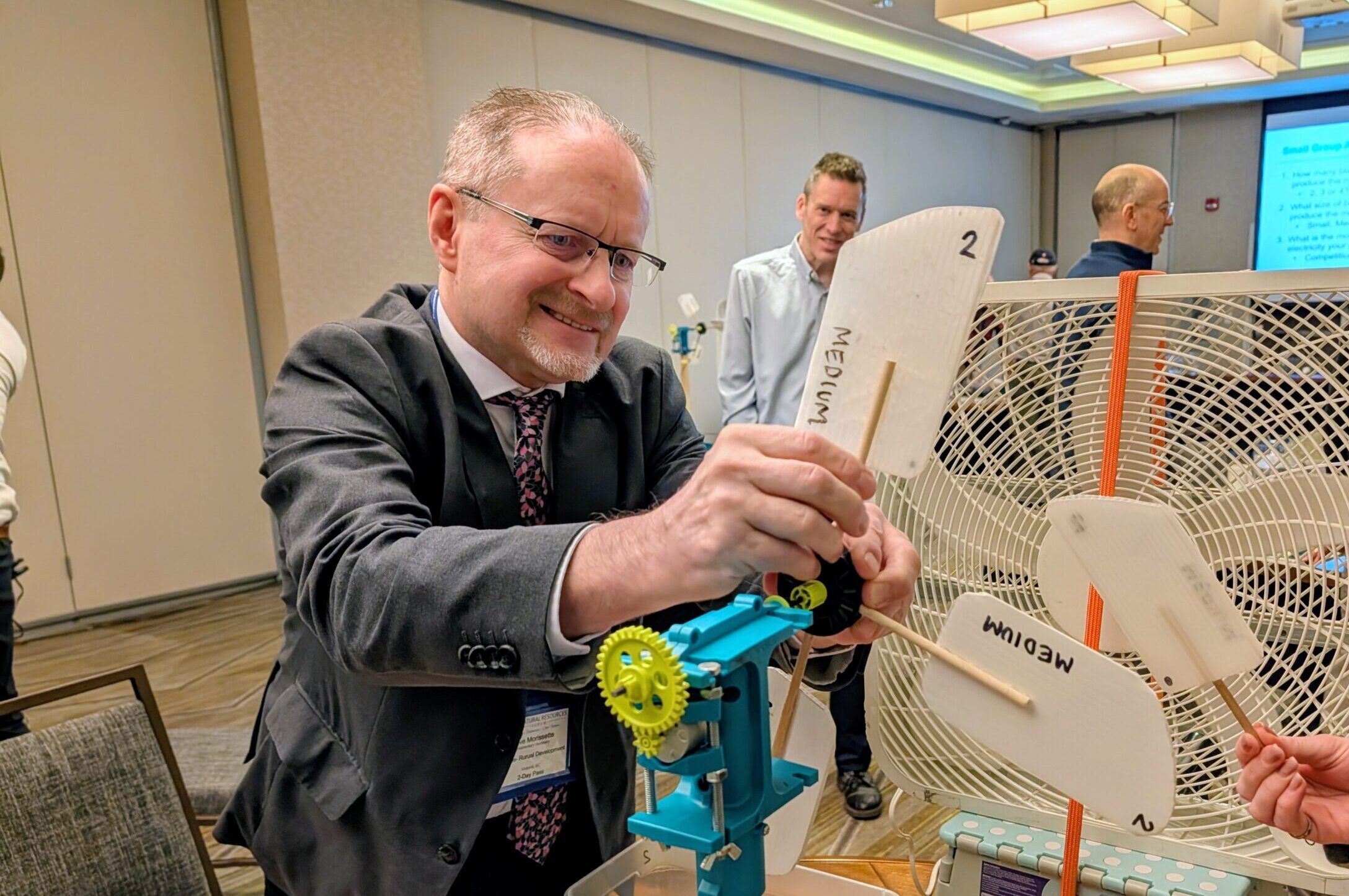
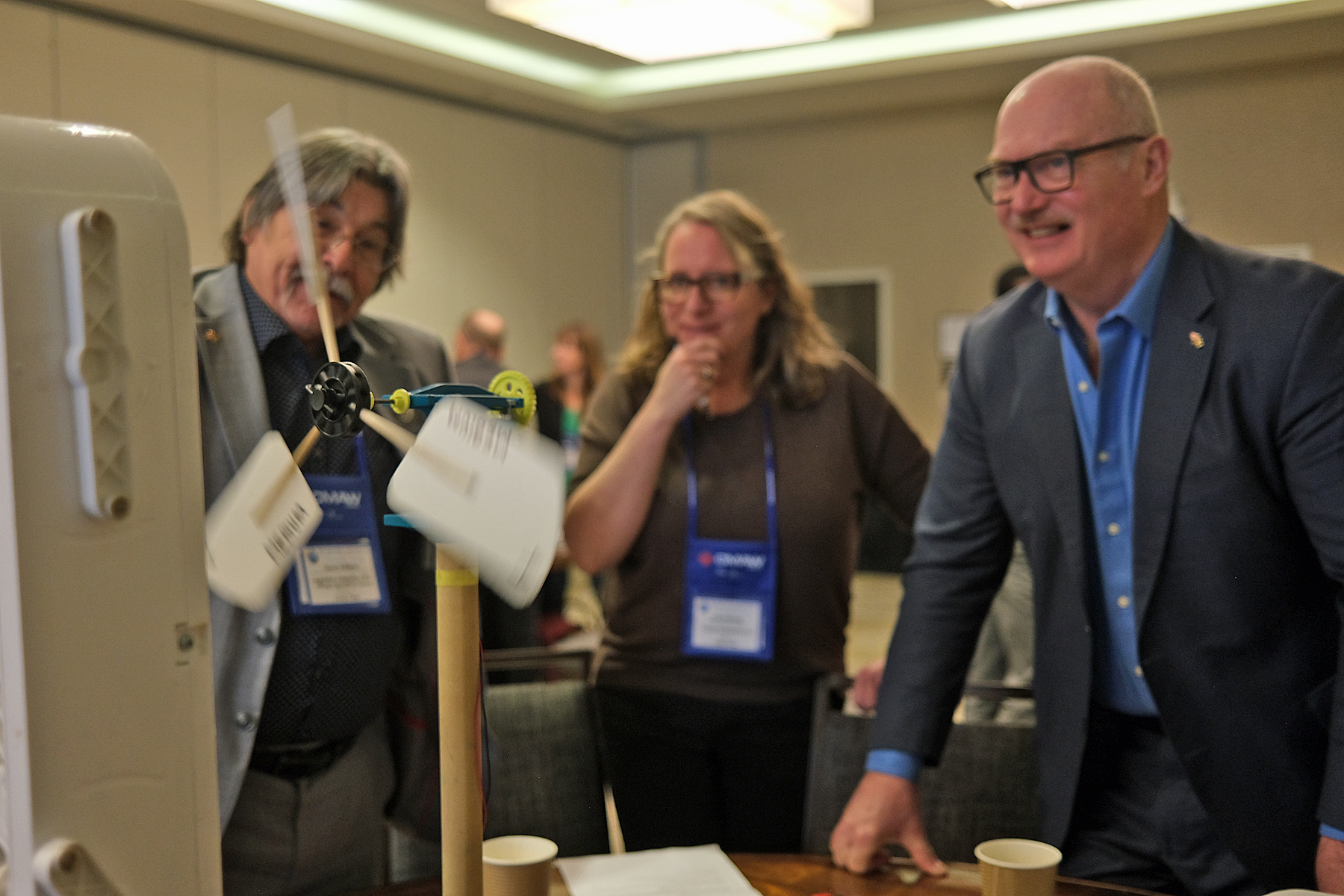
Participants built a small wind turbine and set it next to a box fan to test how the number of blades, their size, and angles of pitch all affect electricity production. Each small group competed against the others to produce the most power from their wind turbine.
Programs and Predictions
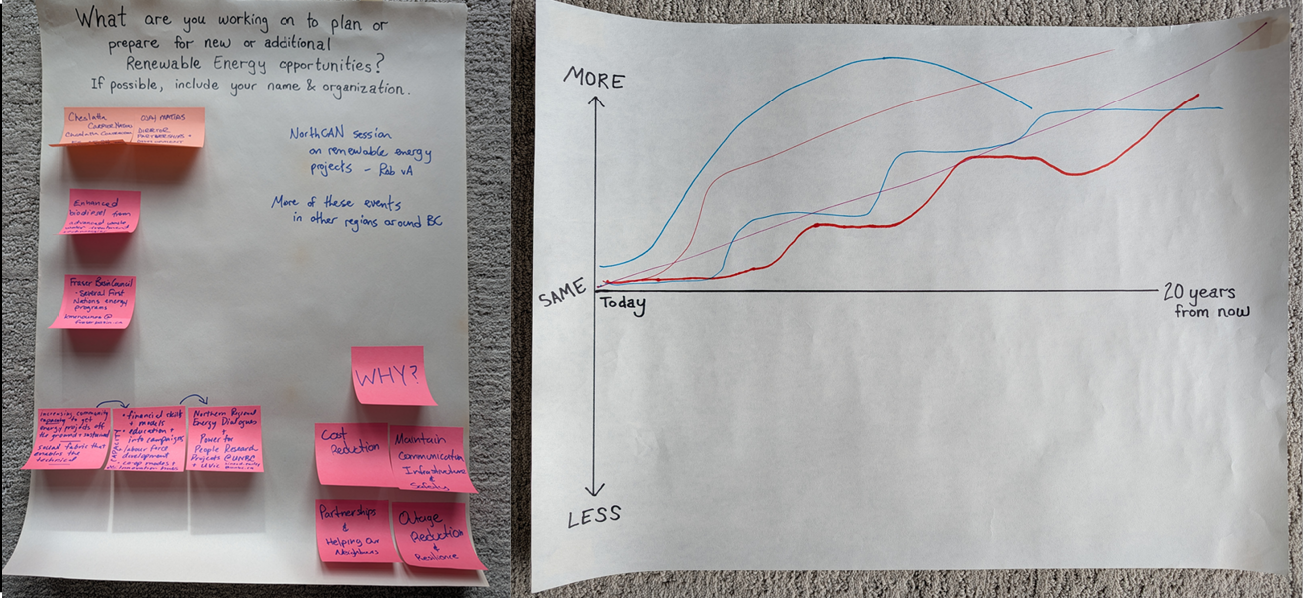
In addition to actual projects, participants contributed information about other planning and preparedness they’re advancing in support of the growth in the regional renewable energy sector. This predicted growth was also reflected in how some participants marked the possible trajectory of renewable energy production in northern BC.
Presented in partnership with:
