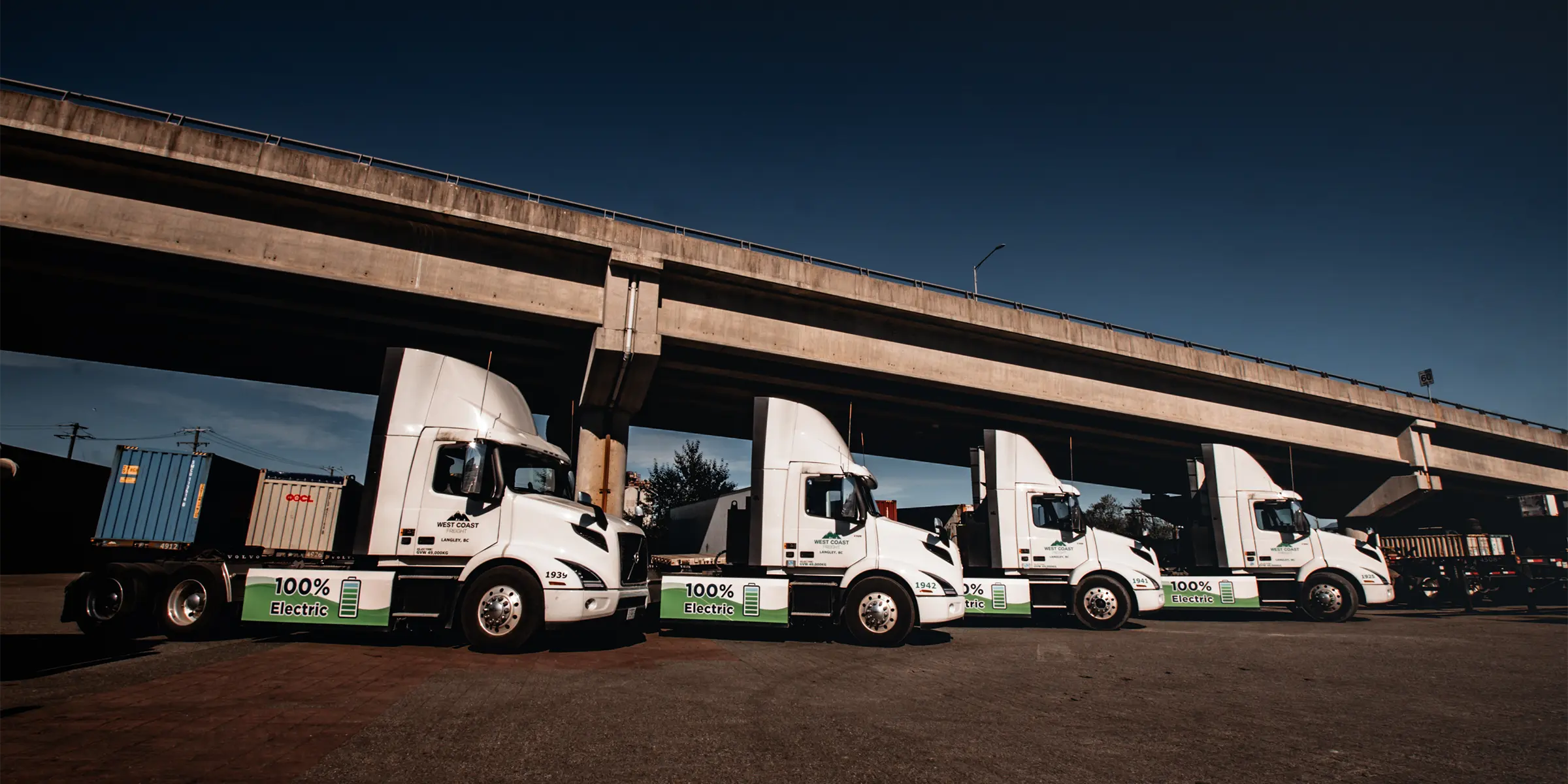
R R Plett Trucking aims to switch all 30 drayage trucks to electric
Case Study
Published: May 28, 2025
Updated: n/a
Relevant Topics: Policy, Transportation
RR Plett Trucking found the part of their operations where electric trucks make sense, starting with the drayage fleet routes returning to the company’s Langley yard where they can plug into high-speed chargers. The company has also capitalized on their substantial reduction in emissions by selling carbon credits through an aggregation service. Maximizing government incentives has also helped reduce the total cost of ownership and offset the capital investment.
Published: March 31, 2026
Updated: n/a
Relevant Topics: Electric Mobility
Climate Zone: 4
What They
Did
R R Plett Trucking is a second-generation family business providing local and long-haul container transportation through the Port of Vancouver. Since 2024, they have integrated the eight electric medium- and heavy-duty trucks into its fleet, along with a set of EV chargers. The substantial capital investment is paying off—each of the six electric semi-trailer trucks saves the company $80,000 annually over their diesel counterparts. Reducing emissions has gained them competitive advantage with large clients looking for suppliers who are pursuing a lower carbon footprint.
| Fleet Size | ZEVs | MHD ZEVs | Alt. Fuels | Chargers | |||||
| 110 | 10 | 8 | 0 | 4 |
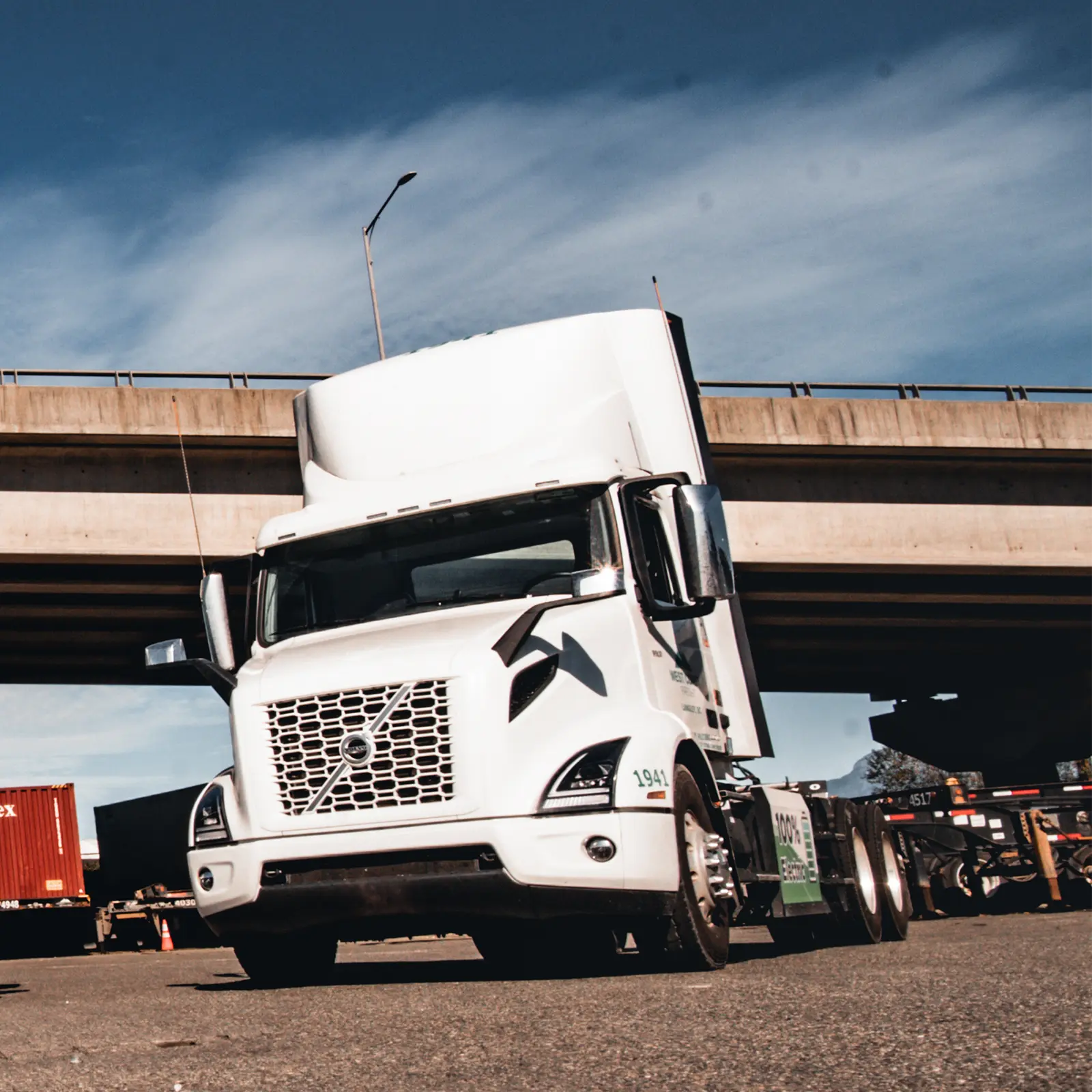
Volvo VNR Class 8 Trucks
- Six Volvo VNR drayage trucks each cover 350 km daily transporting freight containers between Vancouver’s ports and rail terminals.
- Purchase price: $615,000 per truck
- Capital cost rebate: $300,000 per truck from iMHZEV and Clean BC Go Electric
- Annual operation saving: $80,000 per truck
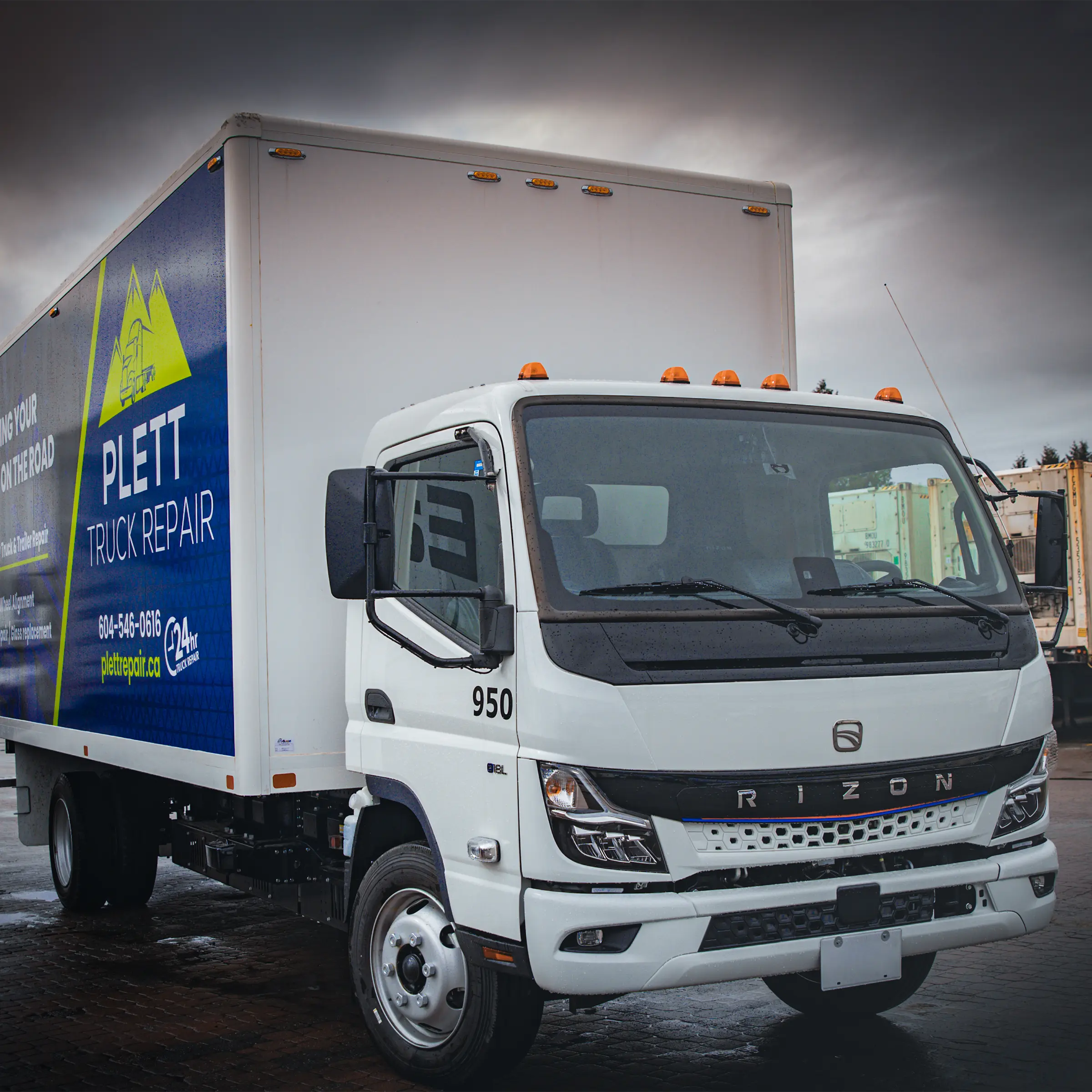
Rizon E18L Class 4 BEV trucks
- Two trucks used by a mobile repair crew that attend local repairs and roadside breakdowns.
- Purchase price: $223,500 per truck
- Capital cost rebate: $150,000 per truck from iMHZEV and Clean BC Go Electric.
- Annual operation saving: $10,000 per truck
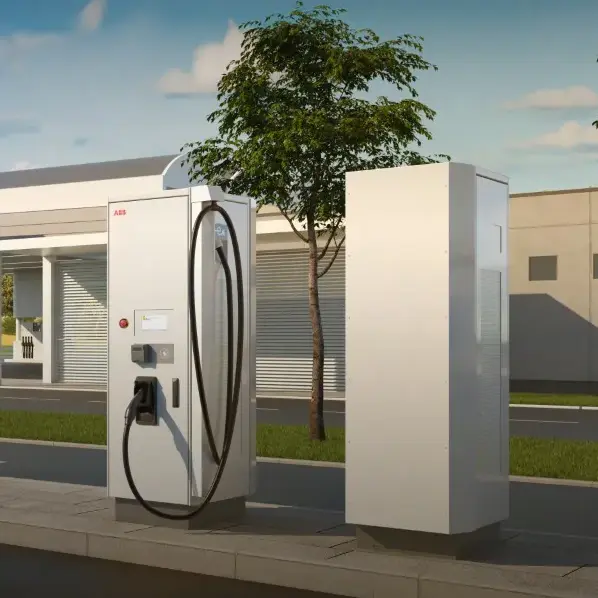
Four ABB Terra Fast Chargers (Level 3)
- The company yard already had heavy power capacity so did not require any electrical upgrades to install four fast chargers.
- Purchase price: $150,000 each
- Capital cost rebate: $80,000 Plug In BC rebate.
- Selling carbon credits often earns the same amount previously spent on diesel.
How They
Did It
1. By accessing incentives and subsidies
COO Trevor Plett first became interested in fleet electrification in 2017 when he saw the launch of the Tesla Semi and immediately placed a deposit for 10. The Tesla trucks have yet to be produced, but it meant he was watching closely in 2023 when Plug In BC announced that grants were available to cover installation of commercial electric chargers.
Plett’s application was successful for two Level 3 chargers, with a rebate of $80,000 towards each $150,000 charger. Fortunately, their Langley yard already had enough electrical capacity. This best-case scenario meant they did not need to carry out any costly or time-consuming upgrade work and further improved the business case for electrification.
Just a month later, Plett heard about Volvo’s VNR electric truck, which was available for local testing and had specifications that matched the company’s local drayage routes. The first two VNR electric trucks joined the fleet in June 2024 and a further four in 2025. The cost of each $615,000 truck was subsidized by $300,000 incentives under Government of Canada’s iMHZEV Program and the CleanBC Go Electric program.
Plett also identified that the company’s heavy duty repair crew could use a battery electric vehicle (BEV) to transport equipment to local roadside breakdowns and maintenance jobs at other businesses.
In 2025, two Rizon E18L Class 4 BEVs were purchased for this purpose, receiving an additional $150,000 subsidy per $223,500 truck. A further two chargers were installed, again receiving a Plug In BC rebate for $80,000 per charger.
To date, R R Plett Trucking has been able to access more than $2 million in BC and Canadian incentives for the eight ZEVs and four fast chargers. These incentives covered around half the total capital cost of each vehicle, creating a payback period of three to four years. Without them, Plett says they probably would not have pursued the first truck, although the electric fleet is now proving its worth to the company.
Find out about current incentives available for fleet electrification in the Fleet Forward Resource Guide.
2. By optimizing routes and schedules
The key to running the ZEV fleet efficiently is choosing the right vehicle for the right route and optimizing its time on the road with a predetermined charging schedule, says company COO Trevor Plett.
While the Volvo and Rizon electric trucks were always targeted for local drayage and service routes that have short, predictable days that start and end at the company yard, it took some time and coordination for the drivers and dispatch crew to get used to the new routines.
The trucks charge in 2-4 hours overnight in Langley and drivers start their shift at 6am fully charged. They complete around 300 km per day over a 10-hour shift, charging during the lunch hour and opportunistically at any other time they happen to be in the yard and not in operation during the day.
Some changes to the usual dispatch routines were needed to ensure the trucks were charged and available when they were needed. Early range concerns were managed by keeping the electric trucks on dedicated routes within a comfortable distance from the charger. When the temperature dropped below zero, dispatch had to account for a 10-15% reduction in range when planning where to send the trucks that day. As more trucks were purchased, a new process had to be created to coordinate charger availability in the yard.
Drivers underwent training, especially how to use progressive braking to maintain range and minimize wear on the vehicles. Plett says they have adapted quickly and appreciate the quieter, smoother driving experience as well as not smelling of diesel by the end of a shift.
“As more electric trucks were acquired, and over time, the integration has become much smoother, and the trucks are now a regular part of our operations,” explains Plett.
3. By monetizing carbon credits
The company further reduces their total cost of ownership for the electric trucks by selling the carbon credits that they earn by using their own chargers. They sell these credits through the carbon credit monetization service 3Degrees.
In CEA’s recent webinar on carbon credits, COO Trevor Plett said that selling carbon credits often brings in the same amount of money that they previously spent on fuel for their diesel vehicles.
He adds: “Setting up the service required some initial administrative effort, particularly around documentation and verification, but once established it has been relatively straightforward.
“Overall, we have found it beneficial, as it provides an additional revenue stream that helps offset the higher upfront cost of zero-emission trucks. It is also a way to verify the reduction in emissions which has been helpful for our clients who are looking to highlight low-emission areas of their supply chain to meet ESG mandates.”
Watch CEA’s webinar “Unlocking the Value of Carbon Credits for EV Charging Infrastructure Owners” to learn more about monetizing carbon credits.
Results
“A clear business case”
R R Plett Trucking has recorded $80,000 annual savings per drayage truck and $10,000 per Rizon truck compared to their diesel counterparts and expects to see a three-to-four-year ROI on the capital investment.
“This is driven by a combination of reduced fuel costs, lower maintenance expenses, and the monetization of carbon credits generated through emissions reductions,” says Plett.
“Electrification has worked well for us, thanks to the low cost of electricity in BC and the heavy power infrastructure already available at our yard. We are still early on but so far there's a clear business case for it.”
“Market advantage”
COO Trevor Plett says switching to zero emissions is no longer about doing the right thing or saving money – it is necessary to remain competitive.
“A lot of the multi-national companies want to work with carriers that are thinking about emissions-free solutions.
“If you're not looking at moving in this direction, you will not be able to get contracts with the companies that have environmental or ESG goals. If you can be one of the first to offer options that lower the carbon footprint, it's only going to help your business.”
Trevor Plett, COO, R R Plett Trucking
Future
Vision
R R Plett Trucking has pledged to make the entire 30-unit drayage fleet zero-emission by 2030 by phasing in ZEVs as technology improves, as infrastructure expands and as additional funding programs become available. The company is currently working with BC Hydro to add a further 1.5 MW power service to their Langley yard to support acquisition of further drayage trucks – likely the Tesla Semi once it is released.
They intend to transition the long-haul fleet to ZEV once technology is available to support the routes. With this in mind, the company is investigating options such as hydrogen, additional depot charging stations, battery buffer systems, and solar integration.
Volvo VNR Electric
Class 8 | 6x4
Since 2024, six trucks have been running local drayage transporting freight containers between Vancouver’s ports and rail terminals.
| Price | $615,000 | Rebates | $300,000 per truck | ||
| Purchased in 2024 | iMHDZEV (Canada) and CleanBC Go Electric | ||||
| Operational Savings | $80,000 | ||||
| Expected Lifespan | 7 to 10 years | Projected ROI | Year 3 or 4 |
| Advertised Range | 440 km | Realized Range | 350 km | ||
| Daily Use | 8 hours | ||||
| Battery | 565 kWh | Charge Time | 4 hours | ||
| Overnight or scheduled between shifts | |||||
| Cold weather impact | 15% lower battery capacity |
Rizon E18L
Class 4
Two vehicles used by the Plett Truck Repair team for scheduled visits to clients and responding to local breakdowns.
| Price | $223,500 | Rebates | $150,000 per truck | ||
| Purchased in 2024 | iMHDZEV (Canada) and CleanBC Go Electric | ||||
| Operational Savings | $10,000 | ||||
| Expected Lifespan | 7 to 10 years | Projected ROI | Year 3 or 4 |
| Advertised Range | 209 km | Realized Range | 140 km | ||
| Daily Use | 4 hours | ||||
| Battery | 124 kWh | Charge Time | 2 hours | ||
| Charged overnight | |||||
| Cold weather impact | 15% lower battery capacity |
ABB Terra
Terra 124, Terra 54
Four chargers installed at Langley facility. Exploring opportunities for chargers at the Delta and Calgary depots which would open up long haul route options.
| Charging Capacity | 340 kW | ||||
| Level 3 Chargers | 4 | Level 2 Chargers | 0 | ||
| Cost per Unit | $150,000 | Rebates per Unit | $80,000 | ||
| Plug-in BC | |||||
Contributors

Andrew King
Project Manager (Transportation)
Community Energy Association

Rebecca Edwards
Communications Lead
Community Energy Association
Contributors
Andrew King
Project Manager (Transportation)
Community Energy Association
Rebecca Edwards
Communications Lead
Community Energy Association
Funding for this case study provided by: